



An economist at Princeton recently wondered what John Maynard Keynes would make of AI. So he trained a model on 12,000 pages of Keynes’s writing plus a handful of recordings and asked. The response he got, from 80 years beyond the grave, wasn’t encouraging.
“Unfortunately, I see the emergence of A.I. introducing new challenges,” warned KeynesBot. “I fear you may end up with skilled and overworked professionals with money but no time, and the rest of society with time but no money.”
Actually, a lot of skilled and overworked professionals in managed services have neither money nor time right now, according to Omdia chief analyst Jay McBain.
“When you’re in front of an audience like this one here, like 1,000 people, two thirds of them are not feeling the exuberance that maybe the vendors do and maybe the new trillionaires that are being minted do,” he says during an interview recorded at last week’s MSP Summit in Orlando for an episode of MSP Chat, the podcast I co-host.
McBain doesn’t blame them either. Omdia expects most of the $85 billion businesses will spend on partner-led AI services this year to flow to sophisticated integrators with both solution-building expertise and giant managed services practices. According to McBain, that combination makes them a threat to MSPs that do ongoing management alone.
“If you want to stay in that lane, not a lot of the $85 billion today is there,” he says. “It will be in five years, but by not being in the room today before the sale, in this business-level, SaaS-level consulting, it may hurt you later on because those people are in the business that you’re in.”
That’s exactly what worries Jeff Totten, co-founder and CEO of Evergreen, the managed services giant you’ve read about here a time or two, because he’s seen it happen before. MSPs did well in the tech industry’s cloud wave and security wave, he told me during an MSP Summit interview, but pretty much missed its equally enormous SaaS wave.
“MSPs don’t really have much of a role in administering Salesforce and HubSpot and a lot of these best-in-class SaaS solutions,” Totten (pictured) said. And they’ll miss an AI wave set to top $3.6 trillion globally by next year, according to Gartner, as well if they take their time about catching it.
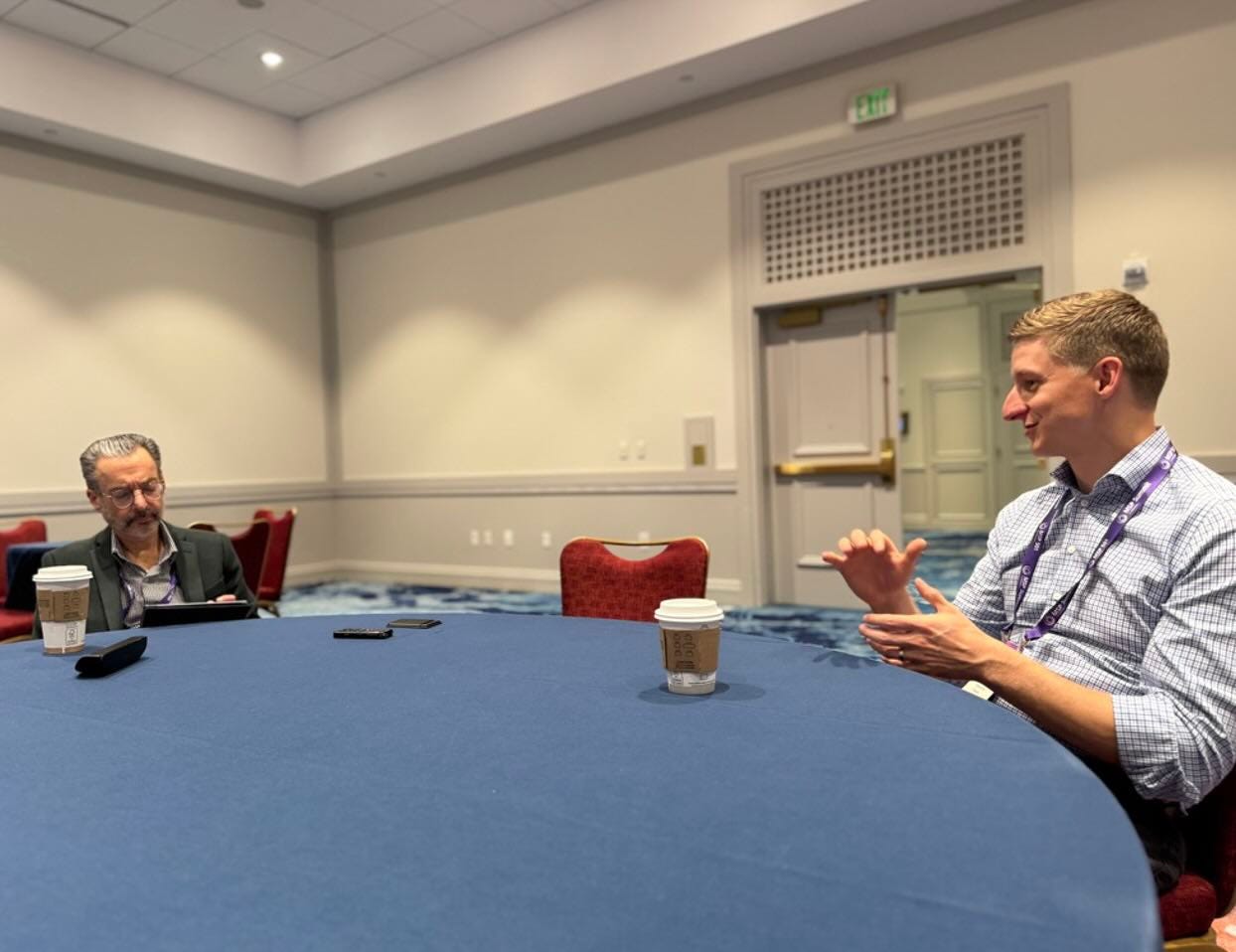
“If a customer doesn’t think about AI and their MSP in the same thought, that creates a risk over time,” Totten cautions, adding that Evergreen is working hard to mitigate that risk.
“We want our MSPs to be on the front lines with customers of helping them use this,” he says.
As a result, Evergreen is pushing its more than 160 MSPs—all of them—to get something AI-related going with their clients ASAP. Sometimes, according to Totten, that takes the form of a secure AI initiative aimed at ferreting out shadow usage. Other times, it begins with a leadership workshop.
“We’ll say, ‘hey, bring your executive team in. We’ll train you on how to use AI, talk about some use case that you want to work on, and maybe we’ll build something together,’” Totten explains.
Some of those projects are being delivered by the forward deployed engineers that eight Evergreen portfolio companies are currently hiring and re-training from within. “They can internally work on efficiency projects at our MSPs, but then also can go to a customer site and automate a manual process for them,” Totten says. “Those are opportunities to really embed with our customers.”
They’re also an example of what Rob Rae, corporate VP of community and ecosystems at Pax8, would like to see everyone doing.
“The one thing that I’m pushing right now really hard on is the fact that every MSP needs to be talking to every single one of their end users about AI,” he says. And they’re not.
“I’ve probably asked about 1,000, maybe 1,200, 1,500 MSPs about how many of you are talking to 100% of your customers about AI, or at least have introduced the fact that if you need anything in AI, call me,” Rae says. “It’s maybe 20% at best.”
The other 80% run the risk of losing clients to integrators, peers, and AI consultants while they perfect a go-to-market strategy.
“We know that this is going to be game changing for all of us,” says Rae of AI. “We just don’t quite know all the answers yet.”
And don’t have time to dawdle while we figure them out.
Great people? Great relationships? Prove it.
AI isn’t the only thing big-time MSPs like Evergreen think about these days. Indeed, it didn’t even come up when I asked Totten and three of his peers atop the managed services pyramid what they look for when evaluating acquisition targets during an MSP Summit panel I moderated. Except as something not to look for, that is.
“There’s so much bullshit when it comes to AI out there,” said Peter Melby (pictured), CEO of New Charter Technologies. “The reality is that AI is built by people and it should be built for people.”

Which is why he, Totten, Jim Siders of Shield, and Saurin Patel of Titan all agreed that great people and strong client relationships outweigh AI know-how as multiple multipliers right now.
“You won’t be able to do anything with AI if you first don’t have very happy customers and deep relationships,” Patel noted.
True enough, but I pushed on the topic a little nonetheless when speaking privately with Totten the next day. Veterans of the managed services scene like me have long known that if you ask 100 MSPs what sets them apart from everyone else, 95 will say great people and strong client relationships. How does Evergreen separate the MSPs that claim to have those things from the ones that really do?
Totten cited three specific metrics: net revenue retention, customer net promoter score, and employee net promoter score. The first two are proxies for client satisfaction. The third is an indicator of employee satisfaction, which tends to correspond with great leadership teams, according to Totten.
Other qualities Evergreen watches for are harder to quantify. “There’s a lot of intangibles,” Totten says, including some that can only be assessed in person.
“We show up at the offices of the company when we’re doing diligence,” Totten notes. “We can usually tell if folks enjoy working with each other or not.”
And if they enjoy where they work, he adds. A “decrepit” workplace is a usually deal-breaking sign of a management team that claims to care about its people but doesn’t.
Abacus doesn’t do generalists
Vertical industry expertise didn’t come up as a valuation booster in my interview with Totten or during that MSP Summit panel, but for the right buyer it makes a huge difference.
Abacus, a global managed IT and cybersecurity provider, is one of those buyers. “We are maniacally focused on two verticals, the financial services vertical and the healthcare vertical,” said Jonathan Bohrer (pictured), the company’s president, during an MSP Summit conversation. “We are not a generalist.”

Which by extension means it doesn’t buy generalists either, a fact that presents both advantages and disadvantages in the M&A market. The obvious disadvantage is that great specialists are harder to find than great generalists. The chief advantage is that specialists tend to like joining forces with other specialists.
“When we get in front of somebody in the healthcare space, we speak their language,” Bohrer notes. “We become a much more compelling cultural fit.”
With an extremely compelling joint market opportunity, one might add, especially in AI. U.S. businesses spent $1.4 billion on healthcare AI last year, according to Menlo Ventures, nearly triple what they spent the year before, and healthcare organizations are deploying AI at more than twice the rate of the broader economy.
Those investments are paying off too, according to recent data from Bessemer Venture Partners showing that buyers projected ROI on healthcare AI spending within about 24 months, on average, and got it in about 12 instead. The situation is similar in financial services, where 89% of companies surveyed by NVIDIA say AI’s helping increase revenue and decrease costs.
Abacus has been capitalizing on that adoption appetite within both verticals in multiple areas, including security. Investment firms, for example, are simultaneously encouraging employees to develop custom AI-powered analytical models and worrying about the harm those models could do.
“The citizen coder is very dangerous,” Bohrer notes. “But to an investment manager, not having a citizen coder to compete is even more dangerous.” As a result, Wall Street is pleading with firms like Abacus for help deploying AI safely. Helping healthcare providers optimize “revenue lifecycle management” is proving equally promising.
“The healthcare holy grail is [addressing] the difficulties of billing and insurance and which code and all that,” Bohrer says. “It’s a really good use case for AI.” Indeed, back office AI investments are returning 3-4x their cost within 12 months on average, according to Bessemer.
Use cases like that abound in pretty much every vertical, including retail and field services, as regular readers have seen here recently. And there are a lot of verticals. 1,012 of them to be precise in SMB alone, according to Omdia’s McBain during that MSP Chat episode I mentioned before. Take just one, he says, like flower shops, and you’re likely to find nine industry-specific, AI-powered enterprise solutions for sale. The same goes everywhere else too.
“If you don’t own a flower shop, you own a tanning salon or if you own a daycare center, you have your own nine versions of somebody went out on Microsoft .NET and built something to manage your entire business,” McBain says.
Every last buyer of those systems will need help choosing one, implementing it, and customizing it from someone like Abacus, moreover. “We have a real sense of optimism that there’s opportunity there on the advisory side,” Bohrer says.
Let’s face it, there’s no substitute for speaking with Jay McBain directly
The next best thing, though, is hearing him speak, as you can in that MSP Chat episode I just mentioned, where we get into the partner-led services opportunity in AI, the future of resale, the power of community in the channel, and much more. Tune in here, and then go here to check out our many other insightful interviews with industry thought leaders here.

Omnissa gives agents a desk
I travel a lot, so I recently created a skill in ChatGPT to automate trip planning. I simply tell it where I need to be and when, and based on a lot of information it has about my preferred airline (Delta), preferred hotel chain (Hilton), seating preference (window, please), and the like it books a whole itinerary for me with very little assistance.
Sounds great, right? It is, usually. Last week, though, I arrived at a hotel the agent had booked for me in Manhattan and got a puzzled question from the guy at the check-in desk.
“It’s just you?” he asked. Yes, I replied. “Then why did you book a quad?”
Wondering what a quad is? So was I. Here’s the answer:

That was my home away from home for two nights, as well as a helpful reminder that while AI grows more useful by the week, if not day, you still can’t trust it to get even simple things right 100% of the time.
As it happens, Peter Melby had flagged the importance of trust in AI two days earlier during that MSP Summit panel session I moderated. Like all four companies represented onstage, New Charter is spending growing amounts of time designing, developing, and delivering increasingly autonomous AI solutions for its clients. According to Melby, the process usually includes a conversation about pain points and business goals, but doesn’t start there. It doesn’t start with the security and data readiness work that precedes successful AI deployments either.
“It starts with trust,” he says. Meaning you’ve got to earn the right to build something autonomous for a customer by first winning their confidence, in you, in AI, and in agentic AI more specifically.
Omnissa sees things the same way, so much so that the theme of its Omnissa ONE conference in Orlando, 10 minutes up the road from the MSP Summit, was “Trust is built. Autonomy follows.”
The autonomy Omnissa was talking about isn’t the one MSPs pursuing agentic AI typically have in mind. Spun out of VMware in the wake of that company’s sale to Broadcom, Omnissa is a maker of virtual desktop, virtual app, and endpoint management software dedicated to building “digital workspaces” that configure, secure, and heal themselves dynamically in AI-enabled, context-based ways. MSPs, by contrast, are increasingly using autonomous apps to manage help desks and digitize end user workflows. The common thread in both cases is an understanding that no one will deploy autonomous anything until they know it’s trustworthy.
Hence one of Omnissa’s biggest announcements last week (along with hiring a new CEO): the launch of Elara, a governance solution designed to help businesses monitor and control autonomous environments, and in doing so build trust in a new and potentially powerful use case for virtual desktops.
The original and still most popular use cases will be familiar to anyone in IT. For end users, they include anywhere, anytime access to their corporate workspace on any device. For IT departments, notes Renu Upadhyay (pictured), Omnissa’s SVP and CMO, they mostly concern security and efficiency.

“The image is locked down,” she says. “You can batch things. You’re doing it once in the cloud, and it’s delivered everywhere.”
All of which remains as relevant as ever to a new set of digital, rather than human, end users. Virtual desktops may not be sandboxes, per se, but they are containerized in ways that make deploying agents in them safer and monitoring what they’re up to easier.
There are other advantages too. An agent running in a cloud-based virtual desktop can keep running nights and weekends even when your physical endpoint is shut off. IT teams can conserve precious compute resources by spinning up “non-persistent desktops” when they’re needed and then spinning them back down when they’re not anymore.
All of which should sound good to anyone supporting users eager to deploy more agents more quickly, including MSPs. “You don’t want to say no,” Upadhyay observes. “You want to say yes.” A virtual desktop, she notes, lets you do so in a way that maximizes effectiveness and minimizes risk.
“It’s connected to the other systems that you use for your job. It’s secure. It’s contained,” Upadhyay says.
And you can bill people for administering it just like you would any other device.
Over on Business of Tech
Host Dave Sobel discusses the downside of automating the help desk with AI:
Knowing when an answer is wrong isn’t a separate skill. It comes from having produced the answer yourself, many times, the slow way … A technician learns what a bad fix looks like by making bad fixes and cleaning them up. They learn which log line matters by reading a thousand that don’t. The check and the work are built by the same repetitions. When the work goes to the machine, the repetitions go with it. The check stops being built, even while the output looks better than ever.
ESET bundles up for AI
If trust is the first step toward successful AI adoption, per Omnissa, security is a close second.
Or rather, it should be, but all too often isn’t, according to Ryan Grant (pictured), country manager for the U.S. and Canada at ESET North America. Per the company’s 2026 SMB Cyber Readiness Index, he notes, few SMBs using AI are protecting themselves effectively from the technology’s many (often uninsurable) risks.
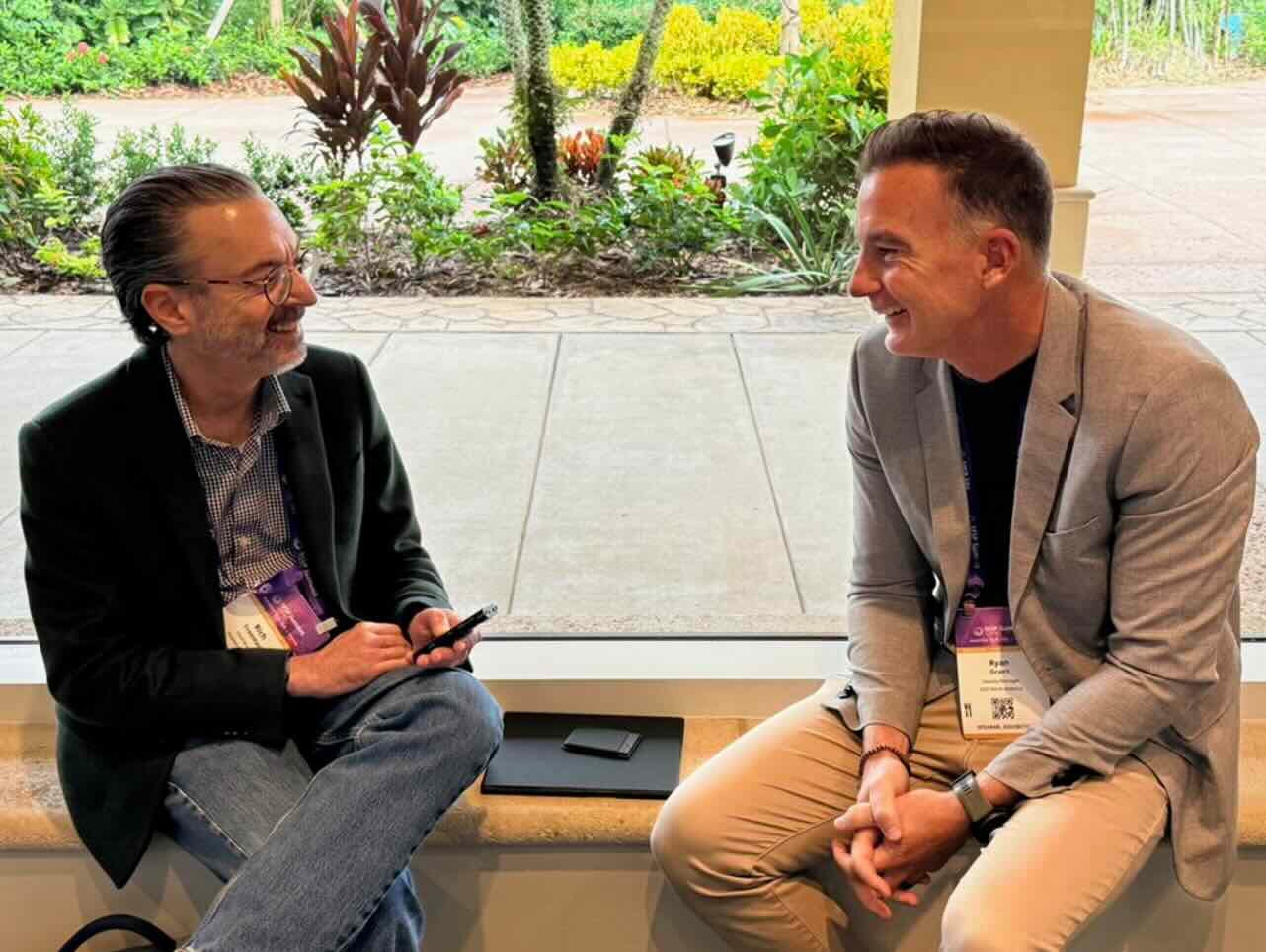
“The feedback was very clear that people are just using whatever tools they can get access to,” Grant says. “It’s an unmanaged environment.”
Actually, the picture painted by that study is even uglier than that. Only 11% of SMBs have a complete set of what ESET considers minimal safeguards for securing anything, let alone AI. The new solution portfolio ESET unveiled last week is designed to raise that number by giving the MSPs most SMBs rely on a bundled collection of solutions and services to deploy.
“Think of it as cybersecurity as a service,” Grant says. “It’s all in one.”
That includes the antivirus, vulnerability scanning, patch management, and other solutions long included in the ESET PROTECT platform, plus the AI-era additions the company introduced at the Black Hat conference two months ago, one of which secures end user interaction with chatbots in web browsers.
“What are they actually prompting AI with? Are they uploading any kind of confidential information? Are they downloading any potential scripts?” Grant says.
A second newly added component automatically blocks suspicious or dangerous agent behavior, while a third inspects agentic skills for malicious content. A free version of that tool available on ESET’s website has already scanned some 900,000 files.
“25,000 came back suspicious and 3,000 were malicious,” Grant says.
Buyers can now choose among three ESET PROTECT tiers. The Core edition offers comprehensive baseline defenses for AI and beyond to organizations with five or more seats. The Premium edition adds autonomous 24/7 MDR protection for companies with 10 seats and above. The Ultimate edition includes live contact with ESET’s threat hunting team along with threat analysis and remediation support. Optional add-ons for security awareness training, MDR onboarding assistance, and cyber warranty coverage are available as well.
The goal across all three tiers, according to Grant, is to strengthen SMB security by helping MSPs acquire SMB security tools more easily. “It’s just simple,” he says, and for an equally simple reason.
“MSPs constantly tell us we’re overwhelmed.”
Let’s talk
When not writing this newsletter, I’m chief analyst at Channel Mastered, a consultancy that helps vendors build, grow, and optimize thriving MSP channels. Wrestling with a channel challenge of your own? Contact me here.

Also worth noting
Auvik and Acronis are allying to embed the former’s network management capabilities within the latter’s RMM solution.
CISO Advantage, from Sophos, is an agentic-AI solution that produces prioritized, budget-aligned security improvement roadmaps.
Cortex XCOR, from Palo Alto Networks, is an AI-native observability platform that autonomously performs root cause analysis and recommends remediation for production incidents.
Exabeam has rolled out AI agent governance, AI-assisted analyst workflows, and other new agentic SOC capabilities.
Keeper Security’s latest integration lets users approve or deny vault and privileged access requests within Freshservice tickets without violating security controls.
CyberFOX is the newest member of TD SYNNEX’s North American security line card.
DNSFilter’s Channel Partner Program now features a new three-tier structure for resellers.
Cyber insurance industry consortium CyberAcuView selected CYGNVS as its official cyber incident response management platform.
Legal AI vendor Clio, which you’ve met here before, has expanded into judiciary apps by acquiring Learned Hand, a maker of AI tech for judges and courts.
Microsoft’s new Frontier Partner specialization for agentic AI is now live.
Also from Microsoft: Unified for Partners, a forthcoming support offering, will give CSP partners enhanced diagnostics, new customer success tools, and more.
IDrive Business aims to provide affordable cloud backup services to small and growing businesses.
Virtuozzo’s new V/Partner global channel program expands commercial incentives, enablement, marketing, and support benefits.
Mari-Frances Bentvelzen is the new president of revenue and commercial operations at ConnectWise.
Allison Clarke is the first-ever VP of partner programs and GTM strategy at WatchGuard.
Former Pia CRO Nic Ferraro, who you’ve met here before, is the new chief growth officer at AI usage management vendor AIONIX.