


Here’s the latest evidence that AI scrambles everything: people are increasingly using it instead of lawyers to represent them in court.
Well, not exactly, but according to a recent academic paper the percentage of federal civil cases in which someone represents themselves rather than hire an attorney rose by an unprecedented 50+% last year. And yes, AI is at least partially responsible: The number of documents filed in the first 180 days of self-represented cases is up 158% over pre-ChatGPT norms, according to the study, which says that “a large and growing share” of those documents appear to be AI slop generated.
Good news, I suppose, if you hate lawyers but terrible news if you are a lawyer suddenly facing competition from Claude & Gemini LLP. Not to mention rising expectations from your clients, 58% of whom say the technology standards they hold law firms to has risen in the last two years, according to new data from mega mega MSP Integris.
Not unexpectedly, those higher expectations are flowing downstream to MSPs. When asked by Integris to name the biggest challenges they face with their current IT services provider, 30% of law firms cited AI implementation and management, behind only budget and roadmap misalignment.
Could it be that MSPs are moving a little too slowly on AI, and not just in the legal vertical? I mean, they are moving. Per data from GTIA shared here two months ago, 71% of technology partners expect AI to be a growing revenue source in the next two years. Yet only 28% expect that growth to be significant, suggesting that most IT providers are still mastering the technical demands and business implications of what might be the most profound paradigm shift in the history of our industry.
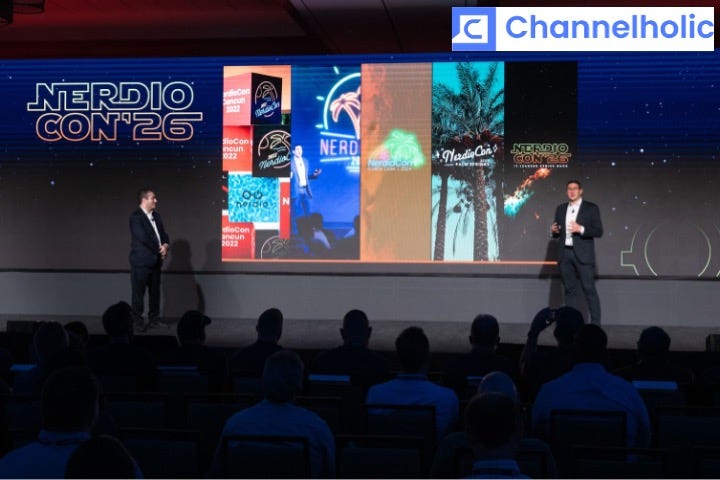
That’s certainly consistent with what Microsoft cloud management vendor Nerdio is witnessing, based on conversations with its leaders at last week’s NerdioCon event in Palm Springs. Though relatively few MSPs consider AI an overhyped fad anymore, according to Will Ominsky (pictured), the VP and GM in charge of Nerdio’s MSP business, only an equally modest number have a repeatable, scalable plan for making money on it. Everyone else is stuck somewhere in between.

“Most MSPs realize they need a strategy,” Ominsky says. “I think the difficulty there is figuring out what’s the winning strategy.”
It’s a legitimate difficulty. “AI is moving so fast,” Ominsky says. “What’s working today, what’s the best model today, might not even be a thing six months from now.”
And we’re not even talking about keeping up with one thing working for one kind of customer, he continues. “I have healthcare, I have legal, I have all these different [industries], and they’re all going to use AI maybe in different ways.”
Placing bets amid all that flux is inherently risky. “You might spend time building out some amazing MCP server or some skills for AI that might be obsolete in six months because there’s some new model or some new kit on the block,” Ominsky observes.
Which is, for sure, a real and potentially expensive danger. But here’s why letting it paralyze you could be dangerous: While you’re noodling your way toward a strategy for profiting from frontier AI technologies, the companies responsible for those technologies are getting a tad impatient.
I’m thinking, of course, about Anthropic and OpenAI, both of which are racing to drive AI adoption, grow revenue, and seize market share ahead of much-anticipated IPOs, and both of which made headlines last week in connection with the launch of services businesses involving a who’s-who of investment world heavyweights ranging from Goldman Sachs, Blackstone, and Apollo Global Management, to TPG, Bain Capital, and Sequoia.
Anthropic’s venture is rumored to have $1.5 billion at its disposal. OpenAI’s is believed to have $4 billion behind it. And unlike the Frontier Alliances program OpenAI announced in February or the Claude Partner Network that Anthropic poured $100 million into in March, the target for these new businesses isn’t giant system integrators and their big business clients.
It’s the M in SMB.
“The organization will work with mid-sized companies across sectors to bring Claude into their most important operations,” an Anthropic blog post reads. And not just on deployment and prompt engineering.
“Applied AI engineers from Anthropic will work alongside the firm’s engineering team to identify where Claude can have the most impact, build custom solutions, and support customers over the long term.”
If that sounds similar to what Shield Technology Partners is doing, with direct support from OpenAI no less, that’s because it is, right down to the fact that OpenAI and Anthropic are both expected to staff their ambitious new businesses via acquisitions of IT services firms.
More on that in a future post. For now, I trust, it’s enough to say that there’d be no need to put $5.5 billion into AI solution building if MSPs were doing it. But they’re not.
“Companies from community banks to mid-sized manufacturers and regional health systems stand to gain from AI, but lack the in-house resources to build and run frontier deployments,” Anthropic writes. And since no one else is stepping up quickly to fill that void, the company implies, we, OpenAI, and most of Wall Street are doing it ourselves.
It’s not just huge, heavily funded service businesses that MSPs have to worry about either. They’re already fighting off the AI consultancies we wrote about last year, and are likely to face competition from a new, nimble generation of AI-native MSPs soon too, Ominsky predicts.
“The barrier to entry to become an MSP is already really low,” he says. “With AI and all of this other stuff, there’s essentially zero barrier to entry. I can go spin up an app, I can go sign up with a few vendors, I can go build an AI strategy, and I don’t have that tech debt and the culture debt that all the existing MSPs out there have.”
The “culture debt” part of that quote alludes to a phenomenon that Rob Rae, corporate vice president of community and ecosystems at Pax8, talked about onstage at NerdioCon. MSPs, he noted, are creatures of habit.
“We do not like change, and this is a significant change,” Rae said. “A lot of MSPs, especially some of the older MSPs, are like, ‘I really don’t want to go through this again.’ But it’s something that’s going to be completely inevitable and I think we’re all just going to have to.”
Go governance
All right, must go faster. But where? Nerdio has a suggestion for getting started directly linked to the thing that all AI users need and few MSPs currently provide: governance.
“MSPs know their customers are using off-the-shelf products. They’re using Claude, they’re using ChatGPT,” says Vadim Vladimirskiy (pictured), the company’s CEO. “They know that’s happening. I’m not sure any are doing much about it.”
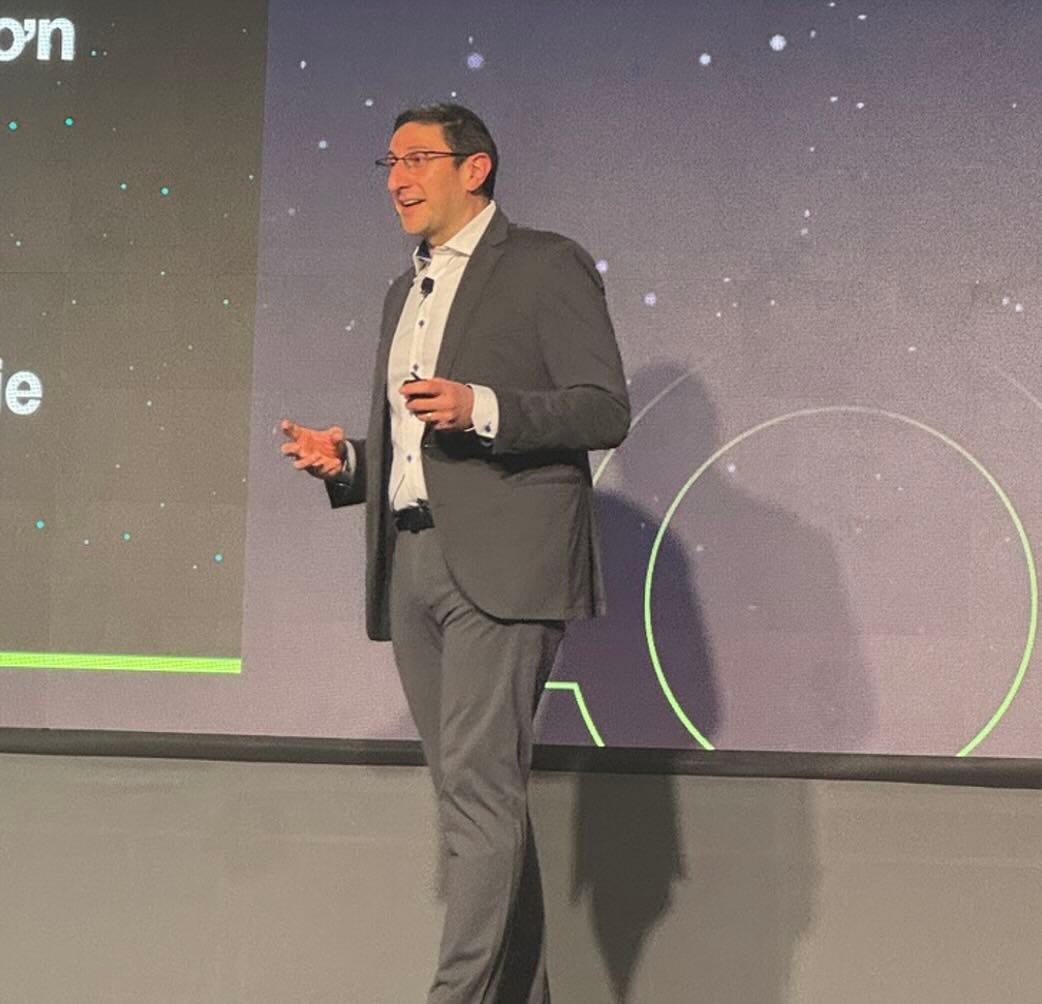
That’s partly due to a shortage of AI governance tools at present, he continues. But according to Ominsky, MSPs can get a lot done anyway with tools they already use.
“Every end customer has a Microsoft 365 license. MSPs know how to manage M365, typically Business Premium or higher,” he says. Those SKUs come with solutions like Intune, Defender, and Purview that MSPs can use to deliver governance services unlikely to go out of style no matter how fast or how much AI evolves.
“That’s never going to change,” Ominsky says. “You’re still going to need to secure the user. You’re going to need to secure the data. You’re going to need to secure the device, no matter what it is. That’s something that you as an MSP can spend time on today and it’s not going to be obsolete in six months.”
In the meantime, he adds, Nerdio’s augmenting its solutions with governance-relevant functionality like the new Purview solution baselines and policy management feature in Nerdio Manager for MSP 7.0, which shipped during NerdioCon.
There could be more coming in keeping with Nerdio’s long-time mission to ease the complexity of Microsoft’s latest cloud innovations for people looking to scale and run quickly, Vladimirskiy hints.
“If Microsoft has Copilot agents that MSPs are responsible for deploying, managing, governing, securing, monitoring, etc., that would be a realm where we potentially could play a very significant role to help MSPs manage that very wild, wild west world of AI enablement,” he says.
Over on The Business of Tech
Host Dave Sobel has thoughts about AI governance too, or more specifically agentic AI governance:
The mechanism is straightforward: the moment AI stops being “a feature you use” and becomes “a thing that acts,” the operational problem shifts from prompt quality to permission design. Agents connect to systems, assume identities, receive scopes, and execute actions—so the real question becomes: what can it touch, what can it change, and what can you roll back quickly if it’s wrong? When organizations can’t answer those questions fast, they buy tooling and services that make the environment enumerable and auditable again.
Remember the cloud?
Agent management help from Nerdio, if it comes, is a forward-looking prospect. There are plenty of ways for Nerdio partners to make money in the Microsoft cloud today though, Vladimirskiy insists.
“The opportunity for MSPs has been great and it continues to be great and it continues to expand, because the Microsoft ecosystem, which is a core technology stack for many of your, if not all of your, customers grows at a very rapid rate,” he said during a NerdioCon keynote.
Indeed, Microsoft’s Productivity and Business Processes segment, which includes Microsoft 365 and Windows 365, grew revenue 17% year over year in the company’s most recent quarter, and its Intelligent Cloud segment, where Intune and Azure Virtual Desktop reside, reported an even more impressive 30% uptick.
Not surprisingly, given the role Microsoft 365, Windows 365, Intune, and Azure Virtual Desktop all play in its product strategy, Nerdio has racked up good numbers recently too.
“Nerdio’s MSP user base more than doubled since the last NerdioCon,” Joseph Landes (pictured), the company’s president said during a keynote appearance. “The number of AVD tenants that we manage grew by over 80%, which is far ahead of the growth rate of the overall AVD market, which is quite large by now. And our M365 user base grew by over 300%.”

There’s plenty of upside ahead too, he thinks, thanks in part to huge demand by AI data centers for components PC makers rely on.
“Memory and storage costs are expected to rise further and more steeply than previously assumed from Q2, squeezing PC vendor gross margins and forcing them to pass costs through to channel partners and end-customers,” writes Omdia in its latest endpoint forecast. That’s a problem if you manufacture PCs or are planning to buy one for one of your employees.
“But you know what you could do?” asks Landes, slyly, during the latest episode of the podcast I co-host. “You could use the existing hardware and spin up a Windows 365 virtual PC and the user is off and running.”
The story is similar for businesses unwilling or unable to go online only as Windows 365 demands, he continues. “Now Microsoft has AVD Hybrid for those users as well where they can run AVD on existing hardware.”
All bullish signals for Microsoft partners more focused on today’s endpoint products than tomorrow’s AI systems, Landes contends. “I only see the TAM, or the total addressable market, continuing to increase for desktop virtualization.”
Speaking of the podcast I co-host…
The latest episode features the entire interview with Landes I just quoted from, plus some early thoughts from yours truly on that Anthropic services venture I mentioned earlier. Tune in here.

Microsoft is still interested in MSPs
Regular readers may recall encountering Intune, which I just referenced, and Ominsky, who I’ve quoted extensively, in a story from September about Microsoft’s #IntuneForMSPs program. Launched in collaboration with Nerdio and inforcer, which both make multi-tenant tooling for Intune, the initiative is aimed at boosting Microsoft 365 use among SMBs by boosting Intune use among MSPs.
“They need to drive more of the higher [M365] SKUs into SMB, Copilot, etc.,” Ominsky says. “The only way they’re going to do it is by working with MSPs, because almost every SMB is buying licensing through their MSP.”
NerdioCon seemed like an excellent place to see if #IntuneForMSPs is producing results eight months since its introduction. Ominsky says it is.
“We’ve seen some really, really good uptake,” he reports. “Every single month, literally every single month, we are breaking records in the number of MSPs that are coming into using Nerdio to manage Intune and the rest of the Microsoft 365 stack.”
It probably says something about the results Microsoft is seeing from the program that it now includes AvePoint, CyberDrain (makers of the CIPP Microsoft cloud management app), and SoftwareCentral (which makes a Microsoft cloud management tool called Tenant Manager). The initiative could see further momentum starting in July, moreover, when the Intune Suite officially becomes part of the Microsoft 365 E3 and E5 SKUs.
“That’s a game changer,” said Lior Bela, Microsoft’s Intune business director, during a NerdioCon speaking appearance. “Why? Because if you already own E3 and E5, you don’t have to pay a dime more for the Intune Suite. Those capabilities are coming to your tenant.” Which means you’ll have access to advanced analytics, remote connectivity, privilege management, and other features that cost extra before.
All very good, but what I really wanted an update on is the degree to which the newfound fire for MSPs within Microsoft discussed in my first #IntuneForMSPs story is still burning.
According to Ominsky, it is. People including the VP atop the Intune product group continue to pay close attention to the program and its MSP members. “There is really senior buy-in and they’re engaging with us and engaging with our partners as part of this program,” he says. “It does feel like a genuine step change with the way that Microsoft’s engaging.”
Landes agrees. Back when he and Vladimirskiy co-founded Nerdio in 2018, he says, few people at Microsoft knew what an MSP is or does. “Now more and more and more, there are people at Microsoft who believe in the MSP community and who are excited about it.”
Nerdio partners are experiencing some of that excitement too, according to Ominsky. “We’re very, very obviously closely aligned with Microsoft, but we’re hearing from MSPs who never had the ear of Microsoft before that they’re feeling some of that love,” he says.
More specifically, at least some of them are getting asked for Intune roadmap suggestions by Microsoft, and seeing some of their suggestions become part of the product.
“It’s a really important thing for MSPs to be able to engage with Microsoft, because it’s been probably a decade of feeling like they just can’t speak to anyone,” Ominsky says.
It’ll be interesting to see if they still have Microsoft’s ear in September, when #IntuneForMSPs should be celebrating its first birthday. The company has gone hot and cold on MSPs through the years, after all. Ominsky, at any rate, thinks the attention Nerdio and its partners have seen to date is only the start of what’s likely to be a long, slow process at Microsoft of figuring out what makes MSPs tick and then acting on what it learns.
“It takes a little while for them to make changes,” he says. “They’re a very, very big company.”
Also worth noting
Congrats to everyone on the newly named 2026-2027 GTIA board of directors.
Atera now guarantees users that its autonomous IT agent will independently resolve 50% of Tier 1 and Tier 2 tickets within the first 90 days of onboarding.
The latest release of CloudBolt CMP includes MCP connectivity, contextual user experiences, and support for public cloud, private cloud, and emerging neocloud platforms.
Huntress, which signed its first distribution agreement last October, has signed four more with Ingram Micro, Vertosoft, Liquid PC, and QBS Software.
SMB security software from Guardz is now available on the Syncro Marketplace.
CrowdStrike’s Amanda Adams, last seen here on Channelholic, has been promoted to senior vice president of global alliances.
More news from CrowdStrike: Jet, its new mobile app for partners, is designed to bring deal origination, closure, rewards, and enablement into a single, real-time experience.
AgentSkope, newly launched by Netskope, is an agentic AI-powered data loss prevention analysis and insider threat triage tool.
Agents behave a lot less predictably than humans, yet 66% of organizations grant them equal or greater system access anyway, according to JumpCloud.
89% of IT leaders struggle to manage expanding identity footprints as AI adoption accelerates, according to new research from Keeper Security.
Fleet Manager, from Object First, is designed to simplify management of distributed backup storage environments.
Insurer/MDR vendor Coalition is now Allianz’s exclusive global partner for cyber insurance across all commercial segments.
Frank Koelmel is the new Business Solutions Group CRO at Bitdefender.
Chung Ip is the new CFO and Lisa O’Reilly is the new VP of Marketing at ThreatDown.
Jeremy Powell is the new CISO and Ben Cody is the new SVP of product management at Sumo Logic.
MSPAlliance’s new Cyber Verify service aims to simplify compliance reporting processes.