



McKinsey published its latest AI status report last week. The title struck many observers as ironic.
Called The state of AI in 2026: On the road to ROI, the study found that the portion of businesses collecting “at least some” earnings impact from AI stands at 37%, a modest number that’s barely budged since 2025. And while McKinsey spoke mostly to big companies, the numbers look only slightly better for smaller ones. Per a new GTIA white paper, also published last week, 40% of SMBs say AI has had a meaningful impact on their business so far.
Nearly four years since the launch of ChatGPT, it seems, most businesses can’t yet find their way to return on AI investments without a road map.
That hasn’t dampened hopes for the technology, however, among SMBs. Fully 77% of them, according to GTIA, plan to increase their AI budget over the next year, and 50% plan to do so by double digits. Which means that whoever can help them bridge the gap between AI aspirations and results stands to make a lot of money.
And therein lies a three-part problem for MSPs:
The device, network, and cloud management services that have long defined managed services are heavily commoditized, increasingly out of sync with end user priorities, and yet not going away anytime soon.
Designing, delivering, and (especially) pricing the AI services that businesses most want right now remain mysterious arts.
SMBs may prove to have a limited appetite for buying two different services priced in two different ways from one MSP.
Integris, one of the mega mega MSPs we’ve profiled here before, thinks it’s found a way out of that conundrum in the form of CORE, a recently introduced offering that combines what CIO Brian Luckey calls “the table stake services of monitoring and help desk” with a suite of AI training, security, governance, and workflow transformation services. The kicker being that the customer pays for it all—including the workflow consulting—on one bill at one monthly rate.
The result is something at once extremely familiar and totally new that turns a decreasingly valuable monitoring and management bundle into something far more relevant to present-day needs.
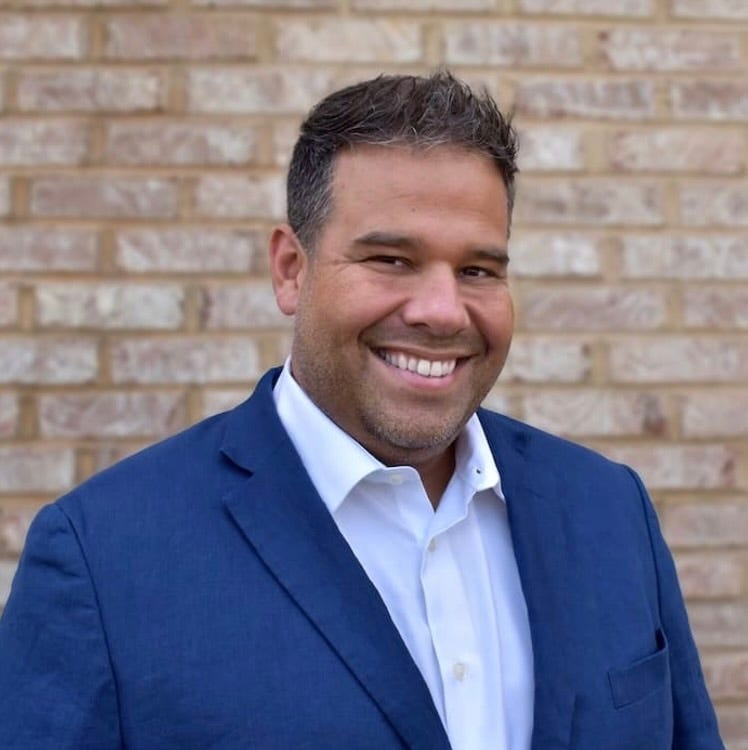
“The relationship with the MSP shifts from closing tickets to instead now deciding on what workflows to improve and what AI touches, governing the data, and really driving enablement and adoption,” Luckey (pictured) says. “It’s the next evolution of managed services.”
And one that yields predictable revenue for Integris at a predictable cost for customers more or less indefinitely, at that. The initial “30-60-90-day plan turns into 90, 120, 150, 180 and so on, and the value now shows up on the client’s own financials,” Luckey says.
Luckey won’t specify what end users pay for CORE except to say it’s more than what they were paying just for outsourced IT “because we’re giving more value,” and that the margins for Integris are higher too.
“They’re at least equal, but for the most part they’re going to be a little bit higher,” he says.
The end result is akin to what Top Down Ventures managing partner Mark Scott, in an upcoming episode of MSP Chat, calls “managed BPO,” as in managed business process outcomes, a new version of managed services with a brighter future than the old one.
“Yes, it’s going to change the model, but we really feel it’s definitely going to elevate the industry overall,” he says.
Grown, not hired
Part of what enables Integris to charge CORE subscribers more than they paid monthly before but not a lot more is that the talent delivering the consulting part is home-grown.
“We’re not going out and finding top-tier Palantir talent in Silicon Valley,” Luckey says.
Cultivating the consulting workforce behind CORE was a slow, steady process that began over a year ago with internal AI adoption efforts like Integris’s AI champions program, which lets employees throughout the company apply for the right to spend as much as half their week building AI solutions. And I do mean throughout the company. Some of the roughly 40 champions Integris has named to date are engineers, but others work in finance, HR, sales, and marketing.
“They’re still sitting in the teams that they always did, but now they’re infusing their team with AI apps or agents and capabilities,” Luckey says. “They’ve created some pretty cool things so far.”
Including the automation tool one champion (“somewhat technical but no engineer in terms of software development chops,” Luckey says) created with Claude Code that saved him and his co-workers on the cloud services team 420 hours in its first three weeks.
“Three weeks, 420 hours,” Luckey says. “It’s wild.”
As well as the kind of accomplishment that can land one-time AI champions a new role on CORE’s customer-facing consulting team and a new source of satisfaction as a professional problem solver.
“We have a lot of people, and we’re blessed with this I think, that just want to help clients,” Luckey says.
So what’s the catch?
By now, I can all but hear Channelholic regulars shouting at me: you’ve told us that CORE’s priced at flat monthly rates, but you haven’t told us how.
Which is the million billion-dollar question, isn’t it? The answer at Integris points to a potential Achilles heel in the CORE model. Subscribers pay for the service through the same per-user and per-device fees they’ve always paid. Which means that from a long-term perspective, as CORE either decreases head counts or slows new hiring for Integris customers, the company will have to charge more and more for the offering or slowly bleed its top line. The company’s leaders are well aware of that fact too.
“We’re looking, of course, at all the different types of pricing models,” Luckey says. Like everyone else, though, they have yet to find one—especially for a service that blends old-school managed services with next-gen consulting—that works.
Speaking of AI…
That’s exactly what my co-host and I do almost every week on the MSP Chat podcast and what we did most recently with Ryan Walsh, Pax8’s chief strategy officer. His take on the marketplace operator’s recently published white paper on “The Agentic Workforce Economy” during our latest episode is well worth a listen, as are our many other conversations with similarly thoughtful thought leaders here.
Managed services M&A has a lot of room to run
Last week was a good one for private equity firms, or at least the ones with software businesses on their books. According to Salesforce CEO Marc Benioff, anyway, the SaaSpocalypse is over.
Which was a defensible statement to make in the wake of the blowout numbers his company had just posted, numbers good enough to leave a share price down over 40% from its 2026 starting point not long ago up nearly 1% for the year as of Friday’s market close.
I suspect there are plenty of questions about SaaS still lingering at most PE firms, though, given how many cloud-based software “zombies” they have in their portfolios, a backlog that has made raising fresh capital (even) harder than a year ago, according to 62% of the PE/VC managers Ocorian surveyed in May.
Unless, of course, they’re planning to use the capital for something other than buying SaaS vendors.
“There are pockets of activity that capital is shifting into,” says Barrett Kingsriter (pictured), senior managing director and founder of M&A advisory Pinecrest Capital Partners. “MSPs are one of those.” For good reasons that look even better to investors anxious about inflation, tariffs, and the bond market, he continues.

“If you’re factoring all of these macroeconomic risk conditions into your investment strategy and thesis, you tend to want to shift capital to mission-critical recurring services” that are relatively immune to inflation, tariffs, and interest rates, Kingsriter says. “The MSP market has all of those things plus hyper-fragmentation.”
Not just fragmentation, mind you, but hyper-fragmentation. There are roughly 20,000 investment-grade MSPs in the U.S. at present, by Kingsriter’s count, and the 64 transactions Omdia tracked in Q1 this year did little to change that.
“If you see dozens of deals done, hundreds of deals done, you’re barely scratching the surface from a consolidation standpoint,” he says. Which means there are years of additional M&A activity still up ahead.
“The consolidation play has a lot of running room,” Kingsriter says. “I still think it’s early innings.”
The PE industry agrees. “We’re seeing these platforms continue to grow significantly through acquisition and then trade hands to larger private equity firms,” Kingsriter says. “It’s just creating additional liquidity in the market.” Which is likely to pull even more, even bigger firms into the M&A picture in the future.
It also leaves one wondering what end game all these ever-larger investors building and flipping ever-larger MSPs are playing toward. “It’s going to be really interesting to see what happens with some of the larger platforms in the space, if they just continue to hold on for a longer term and continue to grow or if ultimately we start to see some IPOs,” Kingsriter says.
Or perhaps sales to strategics? To date, notes Top Down’s Scott on that podcast episode I referenced before, global system integrators have paid little attention to MSPs. That could change, though, once the scale of the SMB opportunity in AI (which has already attracted Anthropic’s interest) finally dawns on them and they start doing some homework. Take the biggest GSI of them all, Accenture.
“It’s $70 billion in revenue, 32% GP, 50/50 on recurring revenue and consulting revenue, 17% EBITDA,” Scott says. The biggest MSPs are doing more like 80% recurring revenue and 25-30% EBITDA, and as Integris’s acquisition of Australian MSP First Focus reveals most recently they’re increasingly mimicking the “G” of the GSI playbook. It just makes sense for Accenture to at least consider taking a giant platform off a PE fund’s hands eventually.
In the meantime, according to Kingsriter, it’s a great time to be one of those investment-grade independent MSPs. “You just have a lot more options for who you sell to when it’s time for your own exit,” he says.
To capitalize on them, Kingsriter adds, MSPs big enough for an investor to build a platform on should focus on scaling organic growth, cultivating operational maturity, and assembling the kind of deep, skilled management team PE investors covet. Smaller ones should prioritize fattening the top line, demonstrating consistent growth, and above all else, perhaps, maximizing retention.
“Because your growth can be eaten up by attrition if you’re not retaining your customer set really well,” Kingsriter says.
Over on The Business of Tech
Who’s that familiar face on the latest live episode of the show? Why, none other than yours truly, of course, sharing thoughts on a couple of recent Channelholic stories with host Dave Sobel. Watch the whole thing here.
Also worth noting
Maybe Syncro’s on to something about LLMs as the interface of the future: Claudeforce, from Salesforce and Anthropic, brings Salesforce data, workflows, and governance directly into Claude.
Google Cloud is previewing new Gemini Enterprise editions for financial services and legal.
Hexnode Context Layer is a new orchestration and governance layer that helps admins translate natural-language requests into endpoint-management workflows.
The new Information Assurance Vulnerability Management capabilities in Axonius Exposures are designed to help U.S. defense agencies find and fix assets affected by IAVM directives before the compliance clock runs out.
Can’t quit VMware even after it quit you? Give the new Rackspace Cloud, a fully managed multitenant platform built on VMware Cloud Foundation 9.1, a look.
Craig Rones, formerly of LevelBlue and Trustwave, is the new CMO at ConnectWise.