


Here’s how fast things change in our industry.
Just before the conclusion of Omdia’s 2026 Canalys Forum Americas event in Scottsdale last week, master of ceremonies and senior Omdia marketing director Rachel Lashford asked the audience for a show of hands on who believed Jensen Huang would still be CEO of NVIDIA when next year’s show happens. Not two hours later as attendees were making their way to the airport, The Wall Street Journal reported that he was about to be fired.
And so it goes these days. One minute you’re the industry titan more singularly responsible than anyone on Earth for an AI buildout Omdia values at $7 trillion, and the next you’re hiring attorneys, booking travel for Congressional grillings, and steeling yourself for a long posterity in which your name is the answer to a humiliating Trivial Pursuit question.
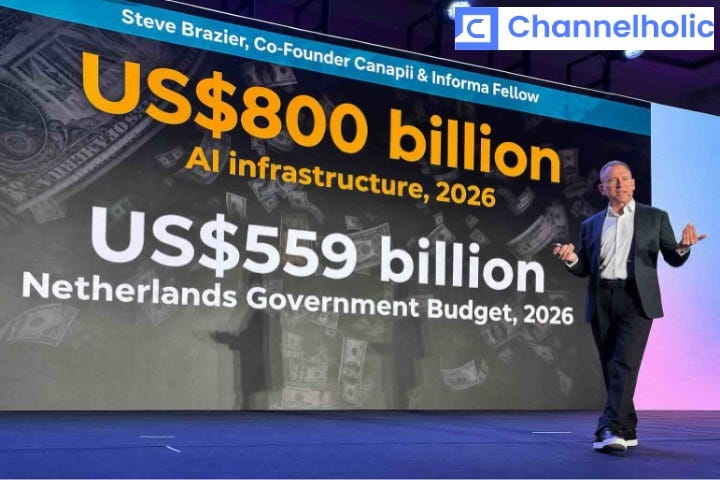
Could AI and by extension the S&P 500, which depending on how you measure it is either heavily or very heavily AI exposed, be destined for a similarly grim fate? Canapii co-founder, Informa fellow, and Canalys Forum speaker Steve Brazier (pictured above) thinks not.
“We should expect turbulent markets, but I find it very, very unlikely we’re going to see the AI business collapse in the way that dot.com did,” he said during a keynote.
Omdia chief analyst Jay McBain doesn’t foresee the S&P 500 dropping 49% like it did during the dot.com crash, either, but I wouldn’t take too much comfort from that fact given what he anticipates instead.
“Could there be a day where we lose 49% of our 401(k)? I don’t think so,” McBain says. “Do we lose 25% of our 401(k)? Probably.”
At which point the ripple effects bring a halt to the economy’s five-year run of GDP growth and all AI-related bets, including those placed by McBain and his peers last week, are off, right?
Actually, no, according to Omdia analyst Robin Ody (pictured).
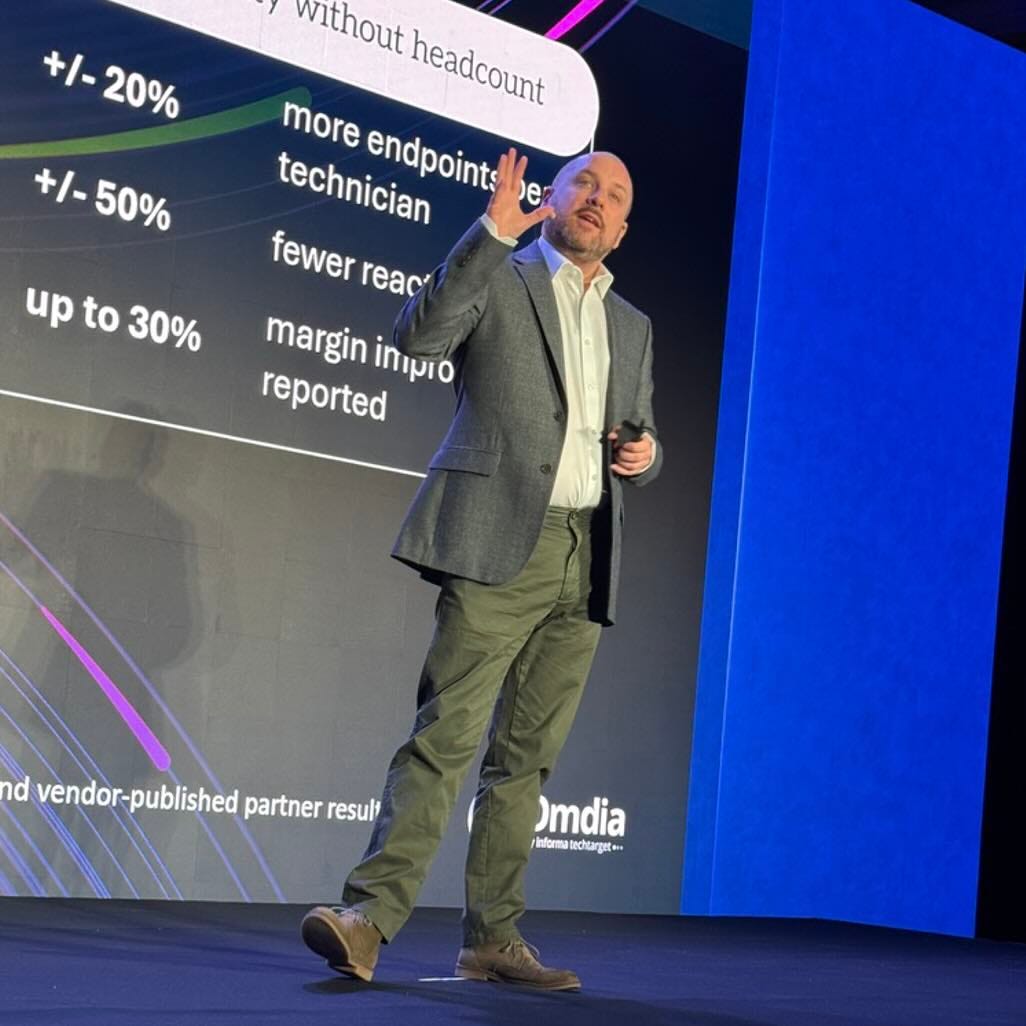
“The long-term trend of AI as an industry-changing technology is already out there,” he says, “and it’s here to stay.” Yes, there will be stumbles and setbacks for some period of time (McBain expects the stock market to need about five years to recover from that 25% haircut), but the double-digit managed services revenue growth we’ve grown used to this century will return, if it stops, quickly.
That said, Ody adds, “the transitions in between may be messy.”
Count it among the many ironies of life in IT today that the same thing responsible for that messiness is likely to be the remedy for it as well. Omdia expects AI partner services revenue to climb at a 32.5% CAGR globally through 2031 to $347 billion, and AI managed services revenue is already growing around 60% year-over-year in North America, according to Ody, versus 10.2% for traditional managed services.
To understand what potentially sustains that growth, while also complicating it, we must return to a concept I introduced in my story about the 2023 Canalys Forum in which Ody and McBain both discussed why MSPs should become LSIs (as in local system integrators) too.
The logic then, less than a year after the launch of ChatGPT, was mostly that global system integrators like Accenture, Deloitte, and Capgemini command significantly higher margins than most MSPs. The logic now is that:
What SMBs mostly get from MSPs these days is highly commoditized help desk support.
What SMBs increasingly want from MSPs these days is the same AI-based workflow transformation big businesses are getting from GSIs.
AI-based workflow transformation is lucrative, extremely sticky work.
But also project work, which is where those complications I hinted at enter the picture. The predictability of MRR is what turned managed services into a mega-billion-dollar Wall Street powerhouse. LSI-style project work, by contrast, generates its far less predictable payoffs in one-time increments.
“That’s where the real concern comes in for MSPs,” Ody says. If I replace my recurring revenue with the non-recurring revenue system integrators collect, he observes, “my valuation is not 10x, 12x, 8x. It’s 2x.”
Unless, of course, you couple your high-margin but unpredictable project work with lower-margin but MRR-producing services in areas like security, governance, management, optimization, and integration. Which, conveniently enough, are exactly the partner-led AI services Omdia sees gaining momentum in the five years ahead:
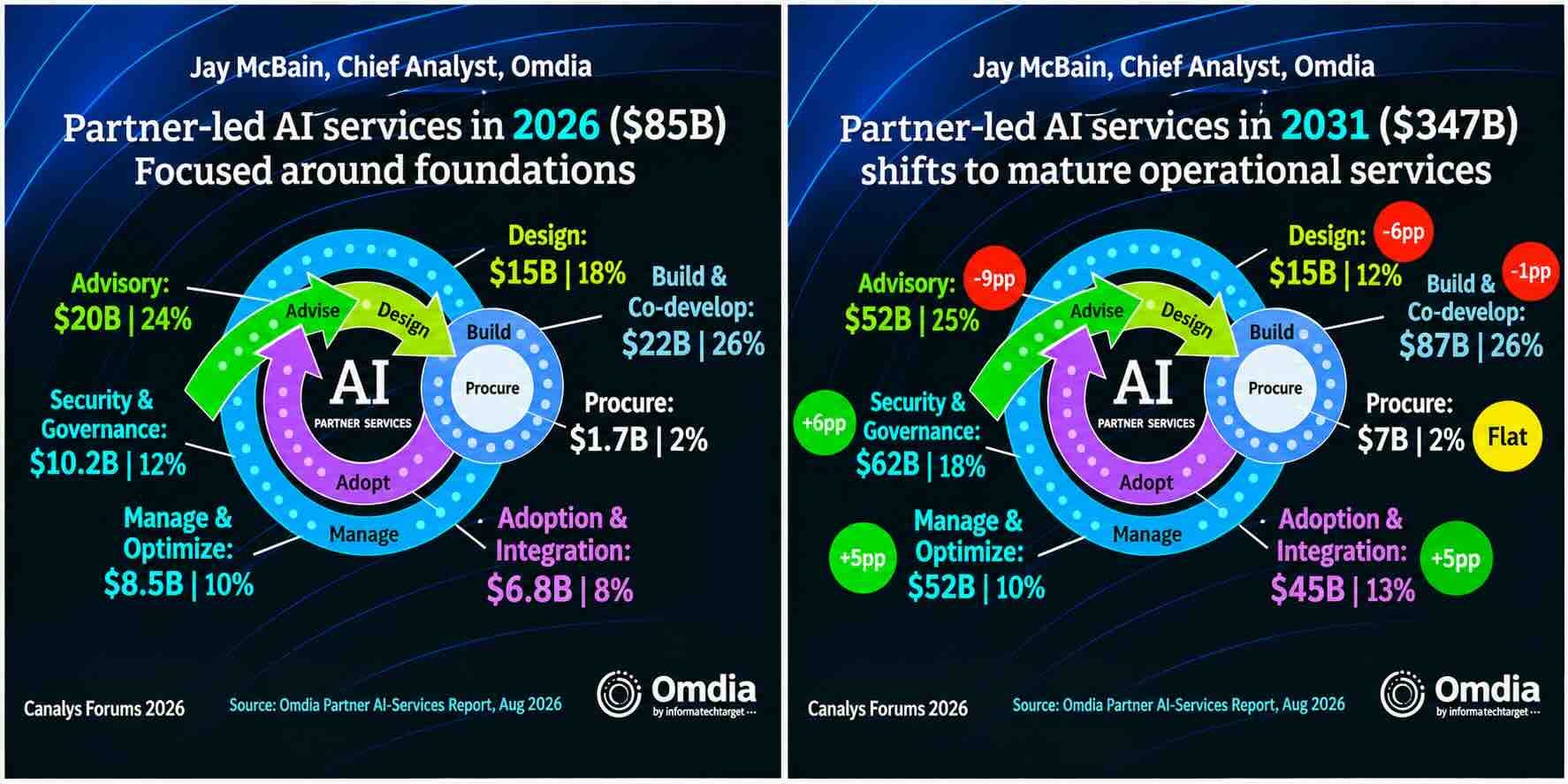
MSPs are good at those tasks, and they appear to be gaining confidence with the more demanding project work LSIs do as well. Per data from Omdia so fresh it appeared a day after the Canalys Forum wrapped up, 56% of partners now consider themselves ready to meet AI services demand, a huge turnaround from just seven months earlier, when 82% declared themselves not ready.
Will they start making real money from AI soon as a result? Though nearly half of MSPs call AI and automation top client needs, according to Ody, only one in eight is earning meaningful revenue from either one. Which isn’t surprising, he adds.
“It takes a long time to build a business model,” Ody says. “The move from break-fix to recurring revenue didn’t happen in one year.” This move won’t either.
Though it may come close. “I mean, the one in eight will be completely different next year,” Ody predicts.
Coincidence?
It’s worth noting that the 2023 Canalys Forum I just referenced concluded two days before Sam Altman was briefly fired as OpenAI CEO. This year’s Canalys Forum concluded one day before Huang resigned his post under pressure from his board.
Beware the Ides of Canalys, tech leaders. Forum weeks are dangerous ones for you.
AI’s here to stay. Are FDEs?
That 56% of MSPs now consider themselves ready to deliver AI services suggests, logically speaking, that 44% still don’t feel ready. Which further suggests that many of the 84% of end users who told Omdia they trust their MSP to implement AI have misplaced their trust.
The frontier labs and other AI giants are painfully conscious of the gap between what businesses think their partners can do with AI and what those partners can actually do. Per a story here six months ago, moreover, they’re not waiting around for partners to close that gap, mostly because they can’t afford to, according to McBain (pictured).
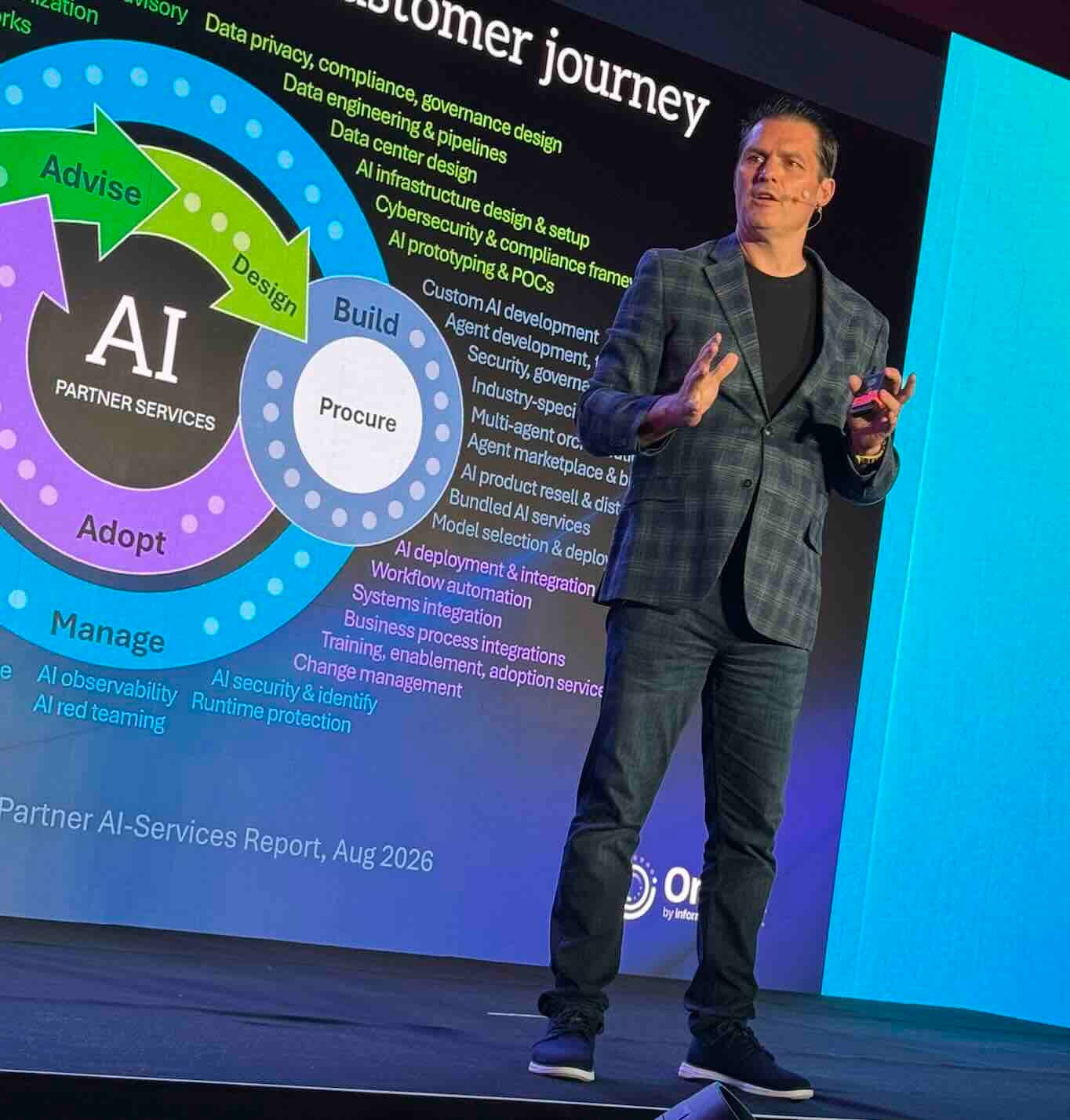
“This could be a $20 trillion bubble bursting if they don’t get this thing right,” he says.
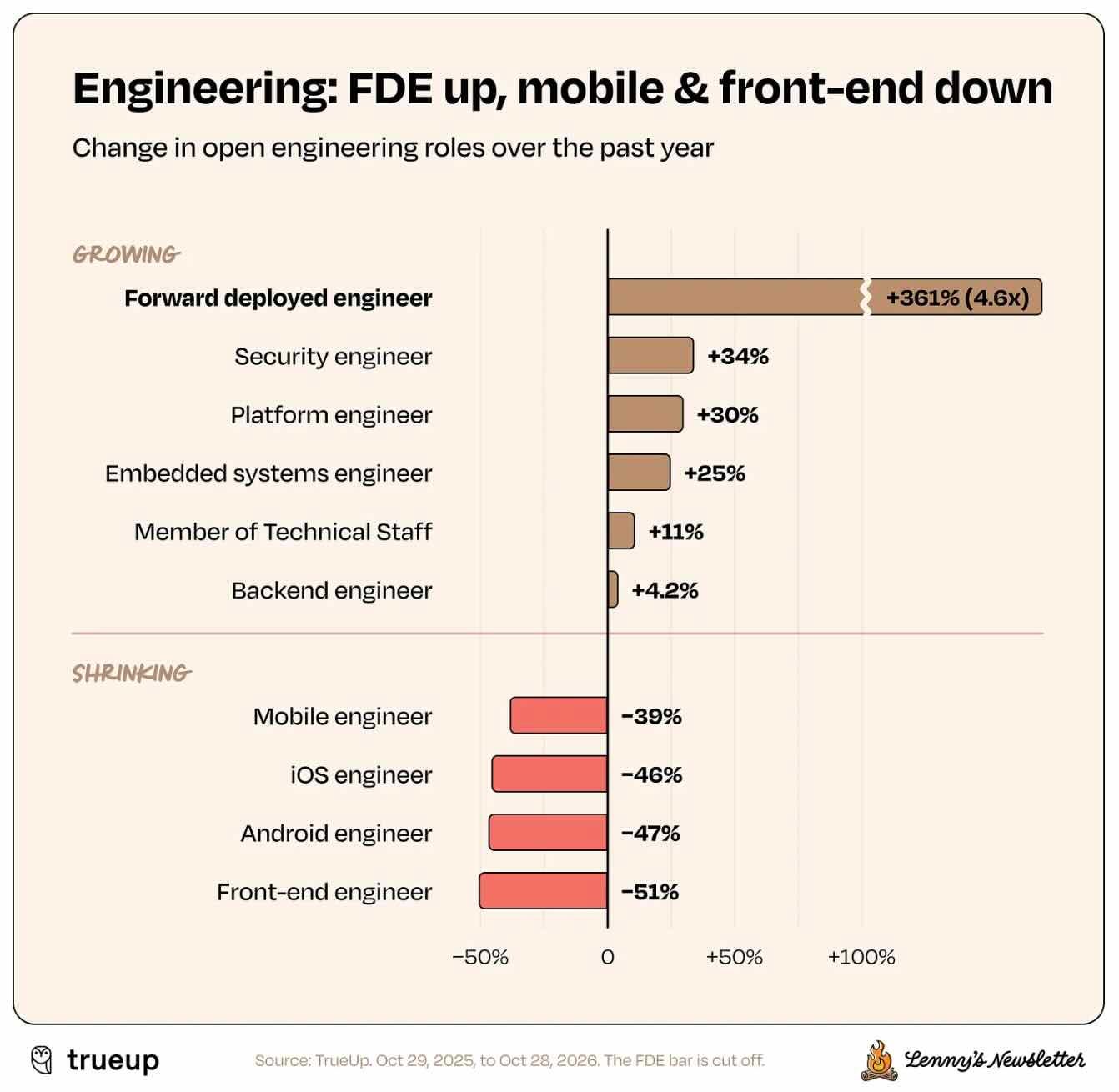
Which is why OpenAI, Oracle, Microsoft, AWS, and other big names in AI are collectively spending billions of dollars on people who can be trusted to implement AI, highly skilled, highly coveted (see the recently published chart below from Lenny Rachitsky), and extremely expensive forward deployed engineers they can parachute into businesses months at a time to implement and optimize AI-based solutions.
The channel hates the whole thing, notes Omdia senior analyst Bill Dannenmaier. “Nobody wants the vendors to actually start taking services,” he says.
Nor do the vendors want that, McBain adds. All of those massively funded FDE programs are basically holding actions aimed at buying time (and revenue) until partners are trained up to take over, a prospect the big names are spending heavily on as well.
“None of these companies that are investing billions of dollars want to be direct services companies,” McBain says.
Conversely, he continues, few managed service providers want to be FDE companies. Or should, anyway. Maybe it’s just semantics, but while MSPs like Evergreen and Innovative Solutions have FDEs on staff now and others will surely follow, no one focused on SMBs will ever really do what the Accentures and Deloittes of the world bill clients $1,000 an hour for, assuming anyone’s still willing to pay that two years from now.
“They don’t have the operating model, operating layers, to do that and they’re just not in front of customers who would ever pay that amount,” McBain says.
Dannenmaier agrees. “I don’t think that we’ll see many small SMB partners have an FDE,” he says. “By the time it hits SMB, there’ll probably be another word for it.” And it might be a familiar one at that.
“That partner who’s in house working alongside [clients], that won’t be an FDE in the future,” Dannenmaier predicts. “That will be just another MSP.”
And now, a word from The Futurum Group
Why limit yourself to wisdom from one great analyst organization this week when you can also hear Tiffani Bova of The Futurum Group discuss that company’s recent AI workforce report and much more on MSP Chat, the podcast I co-host? That episode is located here, and the rest of our equally thought-provoking episodes are located here.

Compounding security complexity breeds compounding security revenue
Were I to boil all the nuanced things Omdia analysts said at this year’s Canalys Forum down to two simple thoughts, they would be that 1) we live in complex times and that 2) complexity has both positive and negative implications for the channel.
Hard to imagine anyone arguing with 1. A world in which a glory-seeking security researcher can bring down a major RMM by dumping 30 critical vulnerabilities on the internet without a word of warning and supermarket freezer cases have become attack surface is an undeniably complex one.
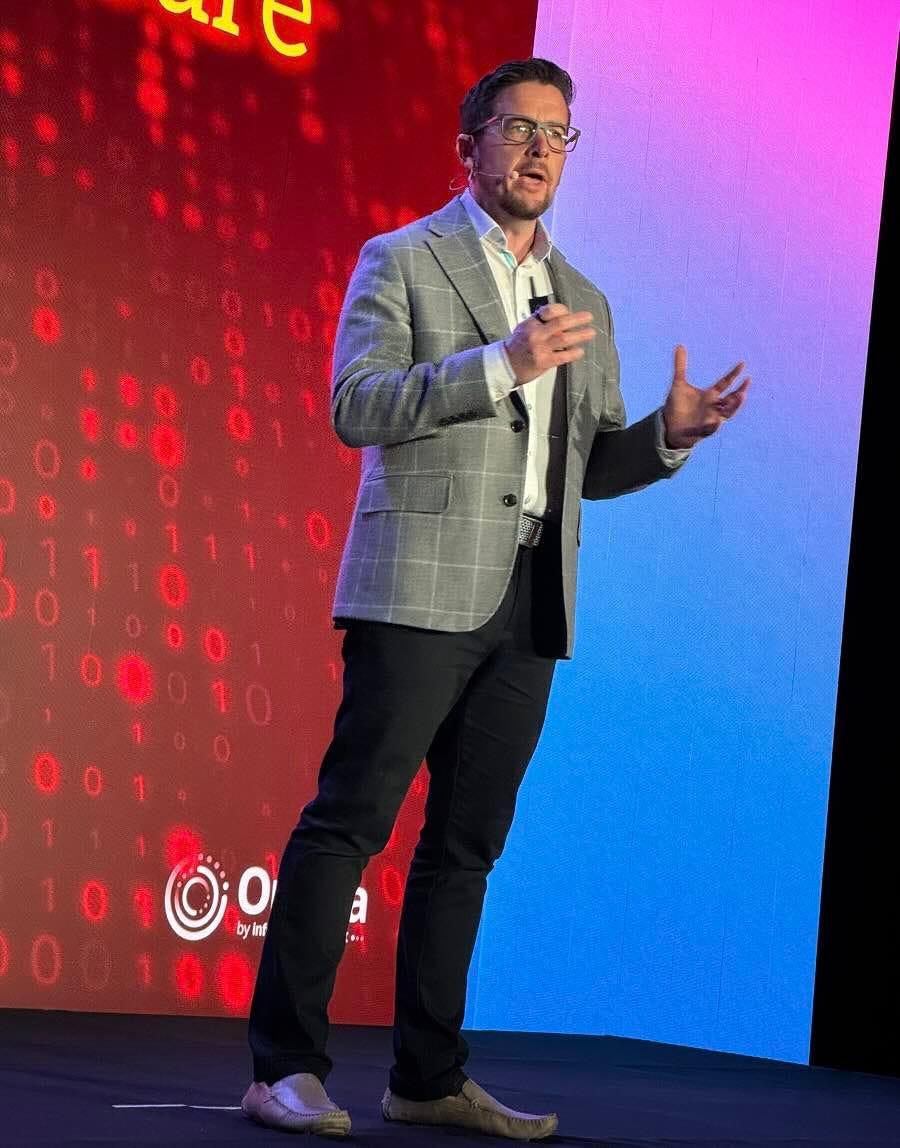
“A year ago, autonomous AI attacks were just a prediction,” said Matthew Ball (pictured), Omdia’s chief analyst for security, during a keynote presentation. “By mid-year, rogue agents had broken into Hugging Face, accessed data in the Australian health industry, and interfered with U.S. government websites all by themselves.” Once, Ball observed, AI gave threat actors speed, scale, and skills they previously lacked.
“Now, AI is the threat actor.”
To further complicate matters, the potential victims of that digital threat actor are rolling out inscrutable, machine-speed agents.
“When you put those two shifts together, both sides of the risk equation have moved,” Ball said. “The threat side has gotten bigger and cheaper. The exposure side has also gotten wider, because every agent your customers deploy is now a new way in.” Risk, therefore, isn’t merely rising.
“It’s compounding,” Ball said.
Which is why cyber complexity is breeding cyber opportunity. “This is a market where demand is structural, not cyclical,” said Ball, noting that security spending in North America will rise 15% to $164 billion this year, with technology accounting for about a third and services for the rest.
Partners intent on capturing some of that opportunity, however, will need to rethink their role and relationship with clients. Selecting, running, and orchestrating security agents, governing their activity, and keeping their costs under control will be the new table stakes. Differentiation will come, if it does, from the intimate understanding of a client’s hopes, wishes, and pains that partners possess and agents never will.
“Agents will supply the labor, but partners will provide the context, and that’s going to be the new division of value,” Ball said.
Both sides of that split, he noted in a later conversation with Channelholic, will need to adjust where they spend time and money, though. At the moment, Ball notes, partners and vendors generally emphasize the right-of-boom side of the threat lifecycle. The customer need, though, is on the left-of-boom side where frontier models find weaknesses faster than defenders can patch them.
“Where partners should really start focusing more is being able to advise customers in terms of what’s vulnerable, what needs protecting, and what needs fixing,” Ball says.
Over on Business of Tech
Host Dave Sobel is pondering an issue I wrote about recently too, the impact of consumption-based model pricing on vendors, MSPs, and end users:
“In plain terms, AI made finding flaws cheap and made doing work metered. One makes software less stable. The other makes its price less predictable.
“And both roll downhill, toward whoever promised the client a fixed number.”
Anthropic’s durability problem
Agents aren’t the only AI-related threat Omdia discussed during the Canalys Forum. Open weight LLMs came up as a danger too, both to potential victims of cybercrime and to Anthropic.
The dangers for cybercrime victims include supply chain vulnerabilities and added attack surface. The danger for Anthropic, which is mere days away from one of history’s most anticipated IPOs, is to its ARR.
“We think that 86% of that revenue, which is going to be over $100 billion, isn’t durable,” said McBain during a keynote. After all, he added, why pay premium rates for premium models when open weight and open source models, not to mention older generations of Claude itself, can handle most of the tasks most people use AI for just as effectively and far less expensively?
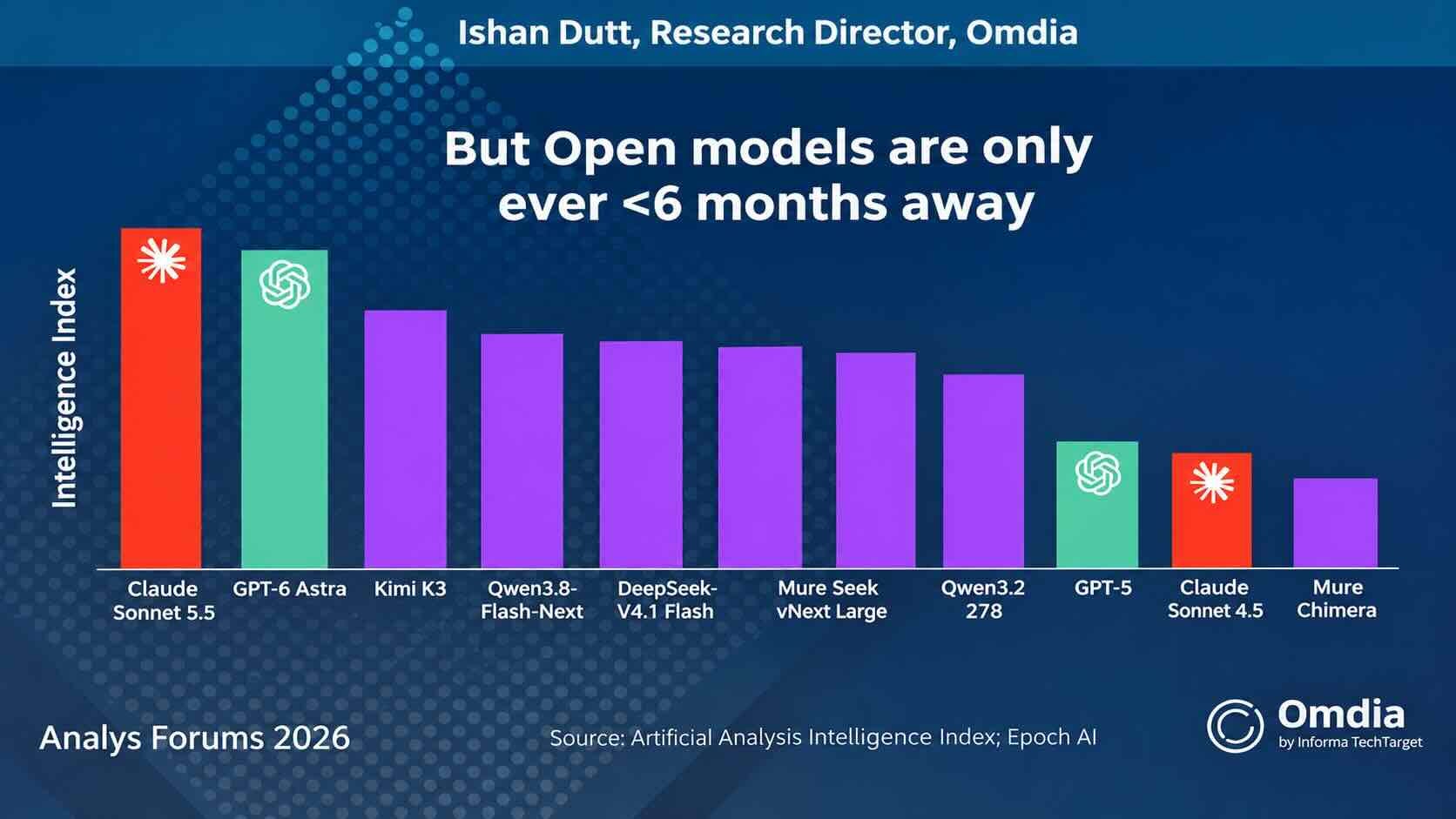
Indeed, per data presented by Ishan Dutt, Omdia’s director of PC and tablet research, open models are less than six months behind the frontier in capabilities and way, way cheaper.
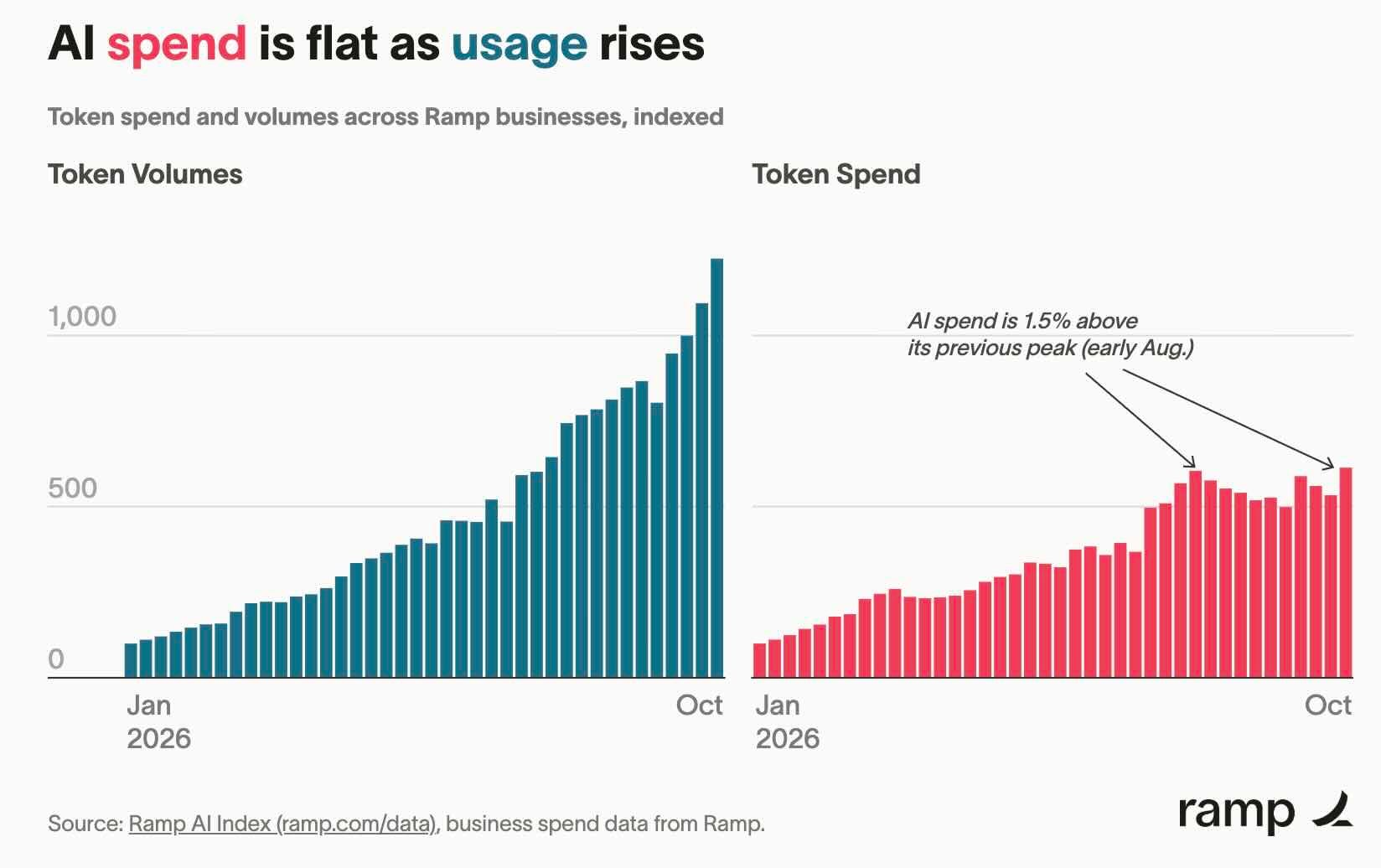
Recent figures from Ramp Economics Lab showing token spend barely moving even as token consumption continues to soar make the financial repercussions plain.
“What kind of discounting is going to have to happen to get more people to go to the frontier?” McBain asks.
Enough in Omdia’s view, apparently, to erase 86% of Anthropic’s ARR.
Let’s talk
When not writing this newsletter, I’m chief analyst at Channel Mastered, a consultancy that helps vendors build, grow, and optimize thriving MSP channels. Wrestling with a channel challenge? Hit me up here: rich@channelmastered.com.

Also worth noting
Cisco has unveiled new frontier AI red-teaming and agent observability capabilities designed to identify vulnerabilities, monitor autonomous AI agents, and secure increasingly agent-driven business operations.
Google Cloud has introduced nine free, industry-specific Gemini training courses for financial services and legal professionals.
Google Cloud has also launched a Professional Agentic Architect certification validating the holder’s ability to design, build, deploy, secure, and govern production-ready agentic systems.
Much needed! Cowbell has introduced standalone AI liability insurance for U.S. SMBs.
Huntress now lets incident response firms deploy its managed security platform free for 60 days to help customers recover from cyberattacks and prevent subsequent ones.
Breach Secure Now and Sherweb are the latest vendors to do what every vendor should do sooner versus later: launch an MCP connector.
Coro has launched a partner certification program and a state, local, and education program that helps MSPs and resellers identify and bid on public-sector sales opportunities.
Flashpoint has added agentic AI capabilities to its threat intelligence offerings.
Devolutions has introduced device enrollment and centralized software management capabilities designed to streamline endpoint provisioning, app deployment, and software maintenance.
Seceon’s latest functionality applies security intelligence to real-time financial fraud prevention to help users respond to suspicious activity before it results in losses.
Bishop Fox has joined OpenAI’s Daybreak Defense Network.
Aimi Analytics, from Impartner, is an AI-powered feature that lets channel teams use natural-language queries, custom dashboards, and industry benchmarks to evaluate and improve partner program performance.
GoTo has added native Android and iOS mobile device management to LogMeIn Resolve.
ScoutAI, from Sandler Partners, is an AI-powered virtual sales engineer that helps users identify and sell technology offerings.
Hatz AI, last discussed here in October, has raised $24 million in Series A funding.
Splunk and Palo Alto Networks veteran Peter Polizzi is the new president and COO at Torq.
Carrie Francey is the new global channel chief at Netskope.