



You’re too kind, Channelholic readers. Almost nothing I’ve posted this year has been more read than my April story about Treeline, one of a growing crop of venture capital-backed MSPs forging a new model for success fueled by leading-edge AI. That means a lot of you read it. Yet no one gave me a hard time for failing to answer a fairly obvious question: How does a company with coast-to-coast ambitions and a strategy based on organic growth rather than acquisitions plan to handle truck rolls?
The answer, it turns out, is by making some acquisitions.
Or more acquisitions, I should say. Treeline had purchased three MSPs by the time I first wrote about it, mostly to bring experienced technicians on board and to help its AI developers refine the company’s software.
“We needed design partners. We needed training data,” explained Jeff Gaines, Treeline’s chief growth officer, during a conversation at Pax8’s recent Beyond conference. The return it got from those investments speaks for itself, he continues. Net profitability at the first MSP Treeline acquired is up 400% thanks to the company’s AI platform.
“That won’t be the case for every business. They’re all a little bit different,” Gaines says. “But even a 200% net profitability lift means we can go to market at a little bit less than our competitors from a cost basis, and we can reinvest into sales and marketing, reinvest more into product development and our engineering talent. Those are all just flywheels that we’re creating.”
With those flywheels now in motion, however, Treeline needs more than just design partners. It needs boots on the ground to deliver onsite support to clients across the country and accommodate their inevitable wish to meet with their trusted tech advisor in person occasionally rather than on Zoom.
“The pursuit is still organic growth,” Gaines (pictured) emphasizes, “but relationships in these local communities still matter very much.”

Which is why Treeline’s buying MSPs. The company has two acquisitions moving through the funnel right now, in fact, and is eyeing more.
“I’m going to be in New York all next week with our M&A person trying to find a partner out there,” Gaines says. “The Texas market’s very attractive to us too.” As are vertical industry markets not tied to specific regions.
“Can we buy an MSP that’s really strong with healthcare?” Gaines asks. “Can we buy an MSP that’s really strong with manufacturing and that has more of a national footprint?”
It can and probably will buy such companies and others too, but not a lot of them. Treeline has no intention of making dozens of acquisitions like Evergreen, Integris, and other mega mega MSPs.
“It’s part of the strategy,” Gaines says of M&A, “but I wouldn’t say it’s the star of the show.” The company’s got its sights on just a handful of metros at present and hopes to “knock those down sequentially and then go from there and maybe pull up in a year and see where we’re at.”
In the meantime, he continues, organic growth has the company on track toward its goal of tripling revenue this year. And not just any organic growth. According to Gaines, Treeline’s seeing huge demand among SMBs for what Pax8 would call managed intelligence. “A lot of the pipeline that’s coming into the Treeline brand right now is tethered to AI opportunities,” he says.
And inbound opportunities at that. Treeline isn’t running giant AI lead gen campaigns. Total strangers are calling into the company to ask about the technology for reasons Gaines can’t explain precisely but suspects has to do with the last two letters of its URL.
“We have AI in our name, so people are coming and asking about that,” he says.
The company’s hatching plans to drive demand in areas beyond AI too. Ask a stranger who the leader in payroll is and they’ll say ADP or Paychex, Gaines notes. “Ask that same person to tell you about an IT company and they would have no idea.” Treeline has marketing plans afoot for next year aimed at changing that.
“Building Treeline into a household name and making it a brand-led business is still very much what we’re after,” Gaines says. “You should just see a lot more of the Treeline name in 2027.”
Permanent capital
Before we move on, I want to belatedly introduce some nuance into my ongoing series of stories about companies like Treeline, Titan, and Shield Technology Partners. I generally call them, as I did at the top of this post, venture-backed MSPs. That’s a perfectly accurate label to attach to Treeline, which is backed by Andreessen Horowitz, and Titan, which is backed by General Catalyst.
Most of the $200 million and counting behind Shield, however, was supplied by Thrive Holdings, a unit of Thrive Capital launched last April. Thrive Capital, as the name implies, is a venture capital firm. Thrive Holdings, on the other hand, is a permanent capital firm, and for reasons the Shield folks stressed during an off-the-record conversation in April, the distinction matters.
Venture capital firms typically plan to exit startups 8 to 10 years after investing in them. Private equity firms of the kind rolling up MSPs right now are more apt to target a three- to five-year time horizon. Permanent capital firms have no time horizon. They build, buy, or fund companies in high-potential markets (like managed services, say) and then hold onto them more or less forever, provided doing so continues to make financial sense.
That’s a model with advantages for MSPs pondering an exit, Shield argues, because it incentivizes your acquirer to embrace a long-term growth mindset rather than a buy-and-flip mentality.
It has implications for someone like me writing about Shield too. Venture capital and permanent capital are two different things, so it’s past time I stop calling Shield’s funding venture capital and start calling it what it is. Though it would be nice to have some way of helping readers understand where Shield fits into the larger trend of investors from the venture universe buying into managed services.
Can I get away with calling its funding venture adjacent?
Evergreen’s budding AI playbook
Treeline isn’t the only MSP getting a steady stream of end user calls about AI at present. Lyra Technology Group, per a recent post, is too. And as anticipated in an even earlier post, it’s experimenting with a variety of ways to satisfy that demand.
One in particular is “really taking off,” according to Ramsey Sahyoun, co-founder and M&A partner at Lyra parent Evergreen. Eight of the company’s 120-ish MSPs have begun embedding forward deployed engineers (three of Silicon Valley’s five favorite words right now) with clients to turn clumsy manual workflows into speedy agentic ones.
“It’s like a really skinnied down version of the Palantir model,” says Sahyoun (pictured). And clients, like a manufacturer Lyra supports that no longer takes orders by hand and an engineering firm that now uses AI to extract project data from blueprints and the like, are loving it.

“You’re saving the customer more money than they’re spending for managed services,” Sahyoun says. “It’s game changing if we can make it repeatable.”
Two lessons stand out already for making it work, he continues. First, talk to a client’s executives rather than line workers to identify workflows in need of automation. “It’s very top of mind for them,” Sahyoun says.
Second, don’t assume any old tech on your team will make a good forward deployed engineer. Evergreen’s been onboarding newcomers for FDE gigs using one specific employee as a model for the skills they need.
“Basically, we found we had one business where there was a person doing this really well for customers, so we interviewed him,” Sahyoun says. “We’ve been hiring based on him to a certain extent. It’s a lot of people early in their career.”
Lyra, which has hired 16 FDEs in all to date, usually assigns them to customers in pairs. “You need someone that’s a little more technical and then someone that’s a little more business process and can be a consultant to the customer,” Sahyoun says, adding that one such duo is all most MSPs need. Palantir’s FDEs can spend months onsite with the enterprises they serve, he notes.
“With smaller businesses where there are probably simpler processes, a team of two can work across a bunch of different clients.”
The AI multiple in MSP M&A
You don’t need to be deploying FDEs like Evergreen as an MSP right now, but having something in AI to offer customers is increasingly what separates winners from losers in managed services, according to Ramsey.
“You’re kind of seeing it show up in the financial results,” he says. “I’m seeing a lot of MSPs that are growing really quickly and I’m seeing a lot of MSPs that are just stagnant for the last few years.” The growing ones tend to be embracing AI. The stagnant ones tend not to be.
Not surprisingly, then, AI maturity plays an increasingly important role in the valuation process at Evergreen, which bought 33 MSPs last year and expects to buy even more in 2026.
“The biggest thing when we do the customer diligence is are they in that conversation with their customers around guiding them on AI or are they being left out of that conversation?” Sahyoun says. “If you’re getting cut out of these conversations around how we implement AI in our business, that’s dangerous, because then you could just be a commoditized help desk.”
Other, more traditional, variables factor into Evergreen’s calculations too these days. “We spend a lot of time on the revenue mix, the organic growth trajectory of the business, and we spend a lot of time on diligence in customer health and customer satisfaction,” Sahyoun says. “The way you get burned in acquiring these businesses is not retaining the customers.”
Not that Evergreen or anyone else purchasing MSPs can afford to be as choosy as they might like right now. “It’s a real seller’s market,” Sahyoun says, less because the supply of MSPs is shrinking than because demand for MSPs is rising at a time when six mega mega MSPs and some 75 private equity platforms are chasing after the same businesses. All that competition has Evergreen looking beyond the $8 to $10 million firms it normally wants.
“We’ll go as small as $3 million in revenue,” Sahyoun says, adding that its EBITDA range has widened too. When Evergreen first opened its doors in 2018 it wanted at least $2 million.
“Then we got into the space and found the slim pickings at that size and we adjusted,” Sahyoun says, first down to $1 million and then to $500,000. It doesn’t seem to have hurt the company much.
“We ended last year at a billion and a half of revenue, $250 million of EBITDA, and double-digit organic growth,” Sahyoun says.
Are SMBs cyber ready?
ESET’s Tony Anscombe has been one of my go-tos on security for years, so it’s hard to believe it took me this long to get him on MSP Chat, the podcast I co-host. Check out his take on ESET’s 2026 SMB Cyber Readiness Index on the latest episode.

Top Down Ventures seeks frequent flyer founders
OK, so now we know what discerning buyers of MSPs are looking for these days. What about discerning buyers of vendors for MSPs?
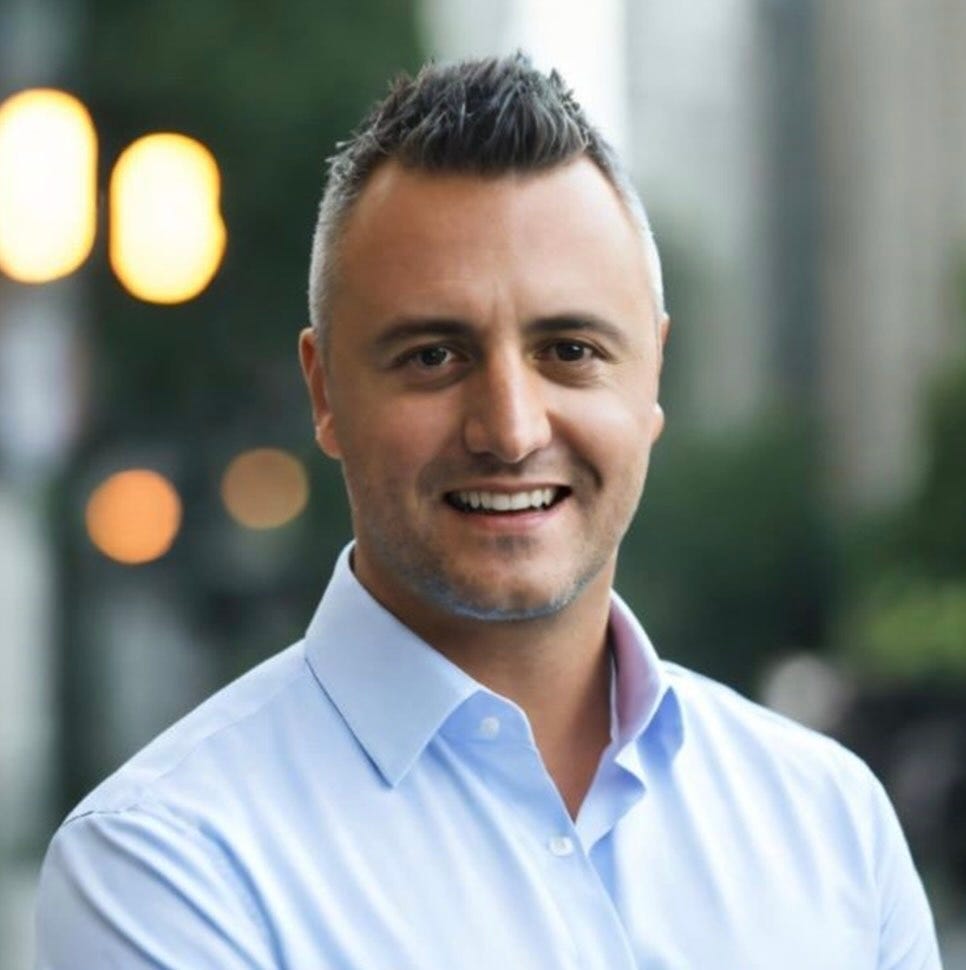
Few know better than Chris Day, founder and chairman of Top Down Ventures, a venture investor exclusively focused on MSP software makers that recently closed its first fund at an oversubscribed $28 million, an amount big enough to get the firm in front of a lot of young software companies.
“I feel like there’s no new startup that we don’t get to look at,” Day (pictured) says.
Not surprisingly, most of those startups these days are doing something AI-related.
Actually, scratch that. All of them are.
“In the last five months, I’m not sure that we’ve looked at anything that’s not,” Day says.
“Everything is either directly on the agentic side, like workflow automation and agentic automation, or on the orchestration side or the observability side of AI.” The quality of their code isn’t what most motivates Top Down to invest, he adds.
“Code is now free,” Day says. “You can write 10,000 lines of code in five minutes.” Great founders are harder to produce, which is why founder quality matters even more than it already did at present. According to Day, the money to be made at the intersection of AI, MSP, and SMB is attracting more high-quality founders than ever.
“We’re seeing more Bay Area-style entrepreneurs, real solid engineering mindset folks, coming out,” he says.
Engineering know-how isn’t the most important attribute in a founder, though, according to Day. The more time people spend on Teams, Zoom, and webinars, he notes, the less effective those tools have become as sales vehicles.
“I think over the next few years, channel events are going to become the best way to get in front of folks,” Day says. Top Down wants people willing to log a lot of miles attending them.
“Not every founder wants to do that, but the ones we’ve invested in are all hustlers,” Day says. “They’re ready to get out there.”
Over on The Business of Tech
You’re running out of time to register for Dave Sobel’s 2026 SMB Online Conference, which runs noon to 3:30pm ET each day June 23 to June 25. Four key facts:
The theme is “Profitable is Enough.”
The content is for independent MSP owners more focused on running sustainable, profitable businesses than chasing growth at any cost.
The speakers include Jay McBain, Tiffani Bova, Arlin Sorensen, Rayanne Buchianico, James Kernan, and Amy Babinchak.
Registration is free for members of Sobel’s Small Biz Thoughts community and just $129 for everyone else.
Details at www.smbonlineconference.com.
Also worth noting
Lyra Cloud Services (part of Evergreen) is partnering with Anthropic to help enterprises adopt AI on AWS.
Google has introduced the Agentic Resource Discovery Specification, an open standard intended to help AI agents discover, understand, and interact with external resources and services more effectively.
GTIA announced six finalists for its inaugural Innovate Awards, which recognize channel organizations delivering high-impact AI solutions.
Barracuda’s new Integrated Email Protection platform is designed to simplify cyber resilience and defend organizations against increasingly sophisticated AI-driven threats.
The latest enhancements to CrowdStrike’s Open Gateway ecosystem are designed to position its Falcon platform as a control plane for AI, IT, and security.
Fortinet has shipped FortiSOC, a unified security operations platform that uses agentic AI to bring together threat detection, investigation, response, and risk management.
Keeper Security’s integration with Wiz aims to help organizations link cloud security findings with privileged access management workflows.
Mark it on your calendar for 2027 and beyond: Coro has declared June 16th Global Lean IT Day, an annual celebration of IT pros who improve efficiency, reduce complexity, and drive business outcomes with lean operational practices.
MSPAlliance has added AI Risk Visibility capabilities to its Cyber Verify platform, giving organizations real-time oversight into AI-related dangers across vendor ecosystems.
HPE’s new unified partner program features incentives, partner-led offerings, and growth initiatives designed to help partners increase profitability and accelerate customer outcomes.
Veeam and HPE are partnering on new private cloud offerings designed to bring resilience and data protection to modern, virtualized AI infrastructures.
AWS’s new Business Value Realization motion is designed to help partners quantify, communicate, and demonstrate the business value of AWS investments throughout the customer lifecycle.
AWS’s new Amazon Connect Customer Competency, meanwhile, aims to help organizations deliver AI-powered contact centers experiences.
Former CIA operations officer Erin Whitmore is the new head of Blackpoint Cyber’s Adversary Pursuit Group.
Alex Callihan is the new CTO at KnowBe4.
Moshe Ben Simon is the new chief product officer at Axonius.
The new Netskope Catalyst MSP/SP Program and Partner Orchestrator platform both seek to help MSPs accelerate service delivery, simplify operations, and generate revenue more quickly.
Three strikes and yer out. Data from Xurrent suggests 60% of end users will consider switching MSPs after three outages.