



It’s a sign of how healthy the managed services sector is, all in all, that a double-digit growth projection is just a touch deflating.
And yet that was my first reaction to the news that the analyst team at Omdia is forecasting a 10% revenue bump for MSPs this year in their 2026 MSP Trends and Predictions Report.
Actually, to dial up the disappointment factor a bit: a) the prediction is for 10% revenue growth in a best-case scenario, and b) they also expect overall IT spending to rise 10.2%. Which means that in a departure from recent trends, managed services growth will slightly trail the rest of the IT industry overall.
If everything goes as well as possible, that is. It’s conceivable, though unlikely, that MSP top lines grow a mere five to six percent.
“Which I think would essentially be flat if you count inflation in prices and acquisition-related growth,” says Robin Ody, Omdia’s head of MSP research, during an appearance on the latest episode of the podcast I co-host. This is the first time he’s ever made best- and worst-case predictions, Ody noted during that conversation, but then again it’s also the first time he’s made predictions of any kind under conditions quite this resistant to forecasting.
“Around the world, we’re seeing significant difficulties from an end customer perspective in terms of budget planning for the next year, because people don’t necessarily know where markets are going to be, they don’t necessarily know where GDP is going, and they don’t necessarily know where the growth is coming from,” Ody (pictured) observes.

They don’t know where tariffs will be, where interest rates and inflation are going, what gas will cost, and where the hardware makers they buy from will get DRAM, assuming they can get it at all, either.
All of that is beyond any MSP’s control, of course, but there’s a longer-term issue very much in their control that dovetails with a lot of what I’ve been talking about in recent months. Revenue will rise 10% for MSPs in aggregate this year, but at a range of rates for MSPs individually. And according to Ody, the distance between the top of that range and the bottom is growing wider.
“Where previously you may have expected more and more of the partners to actually be growing at or close to the market rate, I think we’re actually seeing a bifurcation between the haves and the have-nots,” he says.
At a high level, what the haves have that the have-nots lack is a business model aligned with where managed services have been headed since even before N-able’s John Pagliuca first predicted a have/have-not split among MSPs here in Channelholic. Pricing on commoditized last-generation network, endpoint, and cloud management services has hit a ceiling that it’s unlikely to break through any time soon, Ody notes. As a result, the best way for MSPs to grow profits as well as revenue is to offer next-generation services valuable enough to command strong margins.
“You have to have managed security services capability. You have to have advisory services around compliance and regulation. You have to have capability around AI management, particularly from the vertical requirement of each customer,” Ody says. “It’s easier said than done.”
Indeed. Not every MSP can afford to develop all those capabilities and not every end user can afford to buy them, especially at a time when they don’t know what everything else is going to cost them.
“There are relatively few customers that are ready to spend at the levels that essentially create profitability for MSPs, [and] the number of partners that can go after those customers is relatively low,” Ody says.
That fortunate minority, however, will probably do better than 10% growth this year. The less fortunate majority is probably in for single-digit growth or worse.
“This is why I think we’re starting to see a difference between the haves and the have-nots,” Ody says.
It’s also one more thing for the smaller MSPs likely to be overrepresented among the have-nots to worry about amid the rise of very (in some cases extremely) large competitors.
More good reasons for MSPs to take AI seriously
A few other data points in that new Omdia study are worth calling out before we move on to other topics:
1. You’ll note that I carefully called making money on next-generation services the best way for MSPs to grow profits just now, as opposed to the only way. That’s because spending less on the services they already deliver helps too.
This is the logic behind the many AI-powered service desk automation startups coming into existence these days and the investments more established vendors like ConnectWise and Kaseya are making in similar capabilities. Omdia’s research suggests that users of those technologies are seeing real results, as in a 15% to 25% technician productivity improvement and a 40% to 70% reduction in ticket resolution times. According to Ody, the more you spend your time resolving easy tickets, like password resets, the closer you’ll come to the 70% end of that spectrum.
2. Up to 70% efficiency gains help explain why AI service desk solutions will be one of two top-growing vendor offerings for MSPs this year, according to Omdia. Here are some numbers that explain why AI SOC solutions will be the other.
Thanks in part to AI assistance, the average time cybercriminals need to break out beyond an initial post-breach foothold has shrunk to 29 minutes, according to CrowdStrike’s 2026 Global Threat Report, which further says that the fastest breakout time last year was just 27 seconds.
When the security professionals polled by analyst firm Futurum for a recently published N-able study were asked to name their top hurdles for resolving security vulnerabilities and incidents, alert fatigue and lack of skills tied for first place.
Awareness of MFA as a cyber hygiene best practice among consumers and commercial end users has risen from 52% in 2021 to 77% last year, according to the National Cybersecurity Alliance, yet actual use of MFA has dropped to 53% from a peak of 94% in 2022, perhaps because 25% of people believed losing money online was unavoidable back then and 31% hold that expectation now.
In other words, there are more threats than before, they’re moving faster, they’re overwhelming understaffed security teams with alerts, and their intended victims are getting increasingly fatalistic about the dangers they face. I’m oversimplifying, of course, but it sure sounds like it’s going to take a lot of automated AI SOC horsepower to get us through that.
Plus a lot of services from MSPs and MSSPs, which is why Omdia expects managed security spending to climb 14% this year and MDR spending to rise 13%.
Why take my word for it on all this?
Ody speaks for himself about his 2026 MSP predictions in the latest episode of the podcast I co-host, MSP Chat. Or click the logo below to hear a whole lot of other industry thought leaders and hotshots share their take on managed services, AI, security, M&A, and more.

Do NOT call Certinia’s solution a PSA platform
Officially, Certinia makes a PSA solution. Just don’t let Prasad Narasimhan Sulur catch you saying as much.
“I don’t love the way the market defines the word,” or at least the way MSPs do, says Sulur, formerly a senior partner at Bain & Co. and now Certinia’s chief business officer as of about a month ago. PSA solutions like ConnectWise PSA and Datto Autotask help MSPs manage their help desk. Solutions like Certinia’s help a wider range of IT services organizations manage projects.
“It’s actually two completely different markets,” Sulur (pictured) says, and conflating them can leave MSPs thinking they don’t need a solution like Certinia’s. Which they probably do, I’d argue, if they intend to become one of those next-generation MSPs Ody speaks of.
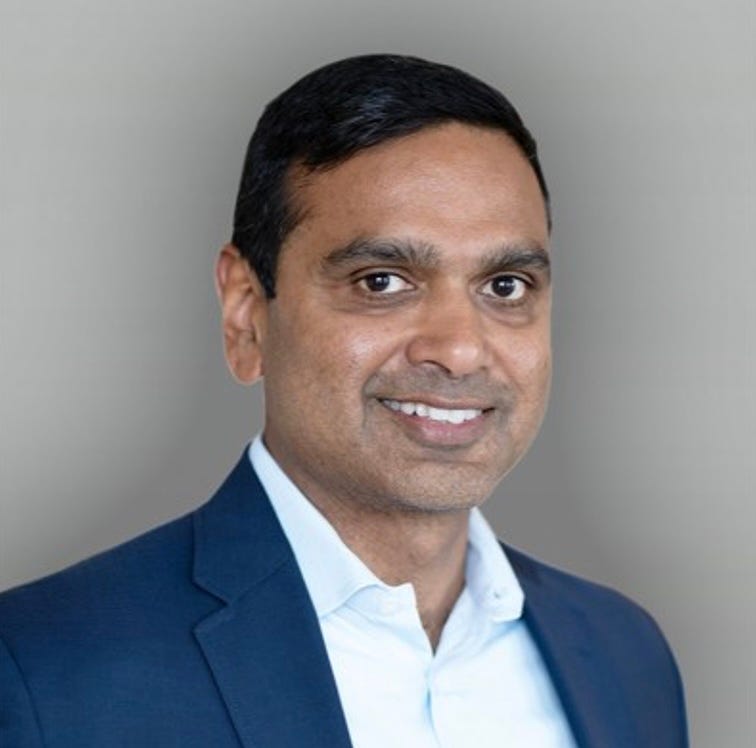
Sulur understands managed service providers, PSA solutions, and Kaseya for that matter, better than most C-suite executives at enterprise software makers, as regular readers discovered last October when he spoke with Channelholic about agentic AI pricing models following an onstage appearance at Kaseya’s 2025 DattoCon event in Miami. But MSPs are at best a small portion of the market he’s targeting, which is IT service providers with a lot of complex work to do delivering projects.
“They have to create the opportunity. They have to staff the opportunity. They have to make sure the project is progressing the right way,” Sulur says. Then there’s billing, revenue forecasting, and much more. Certinia’s solution, he continues, uses AI to simplify all that and transform the services business in the process.
“If you use AI correctly, the same project that used to cost a million dollars might cost $500,000 or $200,000,” Sulur says, allowing you to charge less, make more, or both. You can also complete projects faster, he adds, noting that one Certinia user went from executing 30 projects a month to 300.
On the other hand, delivering services at those prices and velocity poses challenges of its own. “Your revenue and billing model changes,” Sulur says, “and your cost profile changes. You have human people who previously used to do time and expense. You have AI costs coming in. You have software platform costs coming in. You have data costs.”
Helping service providers manage all of that, along with the resources, expenses, timelines, milestones, and more associated with the projects themselves, at scale and high speed, is what Certinia’s software is designed to do. You’ll be hard-pressed to find other enterprise applications similarly tailored to the things services organizations struggle with, Sulur adds.
“CRM is built for product-oriented companies,” he says. “ERPs are built for product-oriented companies.”
And PSA solutions, one might add, are built for ticket-oriented companies. Yet as Omdia just helped us appreciate, closing tickets is heavily commoditized, low-growth, low-margin work. AI and cybersecurity projects are among the next-generation services MSPs looking to escape that trap must provide, and they’ll need a different kind of platform to do it.
Certinia offers such a platform, as does Rocketlane as of a few days ago. Moovila, a company I’ve written about before, is in that category too and focuses specifically on MSPs. Sulur encourages anyone who wants to collect the productivity benefits of AI management functionality and the money-making benefits of AI project work to adopt one of those systems, or another one like them.
“MSPs have to be very forward-thinking on this topic,” he says.
BetterTracker’s big bet on brutal truth
Kevin Lancaster has been up to a lot in recent years. The common thread unifying all of it, arguably, is an effort to convert radical honesty into profit.
Consider: Shortly after selling ID Agent, the security vendor he founded roughly a decade ago, to Kaseya in 2019 Lancaster launched Channel Program, a company dedicated to collecting and disseminating unvarnished MSP product reviews.
Then a few years later, Channel Program launched NaviStack, a tool that in the process of helping MSPs catalog all the vendors they do business with also helped them—and everyone else—see who the real leaders are in various product categories, versus who claims that status.
That was followed last year by a tool called BetterTracker that, by importing data from an MSP’s bank accounts and credit cards, showed a lot of people who took pride in financial discipline how much they were wasting every month not only on software they never use but on a whole bunch of other things to boot. Those people included Lancaster himself, who discovered during beta testing that he was spending $600 a month on a subscription he thought he’d canceled six months earlier.
And then, last week, the company renamed BetterTracker in response to that system’s unexpected success began publishing the StackMarket 250 Index, a sort of S&P 500 for the managed services world offering an extremely public look at the top five names in 50 product segments based on objective, anonymous adoption and month-over-month momentum data from close to 10,000 MSPs.
“We think it’s the first time that anybody’s ever shown in an impartial, unbiased way the true market share of these vendors,” Lancaster (pictured) says. “Some vendors might not be happy about it.”

They will, however, finally and definitively know exactly who their top competitors are. As will venture capital and private equity firms looking for rigorously empirical signals on who’s hot and not in product categories they wish to enter and MSPs hungry for something more than Reddit posts to go on when evaluating vendors too.
“We’re helping both sides make better decisions,” Lancaster says.
Beginning Monday, meanwhile, BetterTracker subscribers from the vendor side of that divide and their private capital backers will have access to far deeper market insights via the Strata Intelligence Suite, a new source of brutal truth that displays not only a more extensive list of category leaders but what their market share is and whether it’s trending up or down. Based on the user product reviews BetterTracker collects, the system also shows vendors how MSPs score them on key product attributes.
A similar offering for MSPs due within the next two months will help them compare the tools they use to what their peers use. “We can show them based on their size what their stack should look like,” Lancaster says.
That latest instance of tough love will be followed by yet another soon when the StackMarket 250 begins gradually evolving into the StackMarket 1000.
“We have pretty deep data now on about 200 different product categories,” Lancaster says. “Over the next probably month and a half, you’ll start to see us put in at least another 50 to 75.”
Over on The Business of Tech…
Podcast host extraordinaire Dave Sobel says that AI has made speed a scarce resource for MSPs.
“Your clients are not buying ‘ticket closure.’ They’re buying throughput with accountability. If your operating model is optimized for queues and approvals, you will be seen as the thing slowing the business down—and the business will work around you.”
Much more on that and other topics you care about right here.
Also worth noting
Wish I could have been there to see the launch! ThreatLocker now has a zero trust network and cloud access platform designed to prevent credential-based cyberattacks by enforcing least-privilege and zero-trust access controls.
Cork Cyber’s new software installer scripts are part of a broader expansion from cyber warranties to continuous cyber risk intelligence and automated remediation.
The Insurability FastTrack Program, from Sophos and Spektrum Labs, aims to help Sophos MDR users improve their cyber risk posture and qualify more easily for cyber insurance coverage.
The three new AI agents from IRONSCALES are designed to help security teams detect and respond to advanced phishing attacks and emerging forms of agent-driven cybercrime.
Keeper Security has added integrations with Atlassian Jira to help organizations unify privileged access governance with security incident response workflows.
Forcepoint’s latest data security functionality includes the Aria AI assistant and expanded endpoint data protection designed to safeguard data across distributed environments.
I wrote about the role distributors play in accelerating AI and cloud adoption here. GTDC has written about it now too in a new white paper.
Monjur’s new Monjur Pilot is an AI-powered assistant designed to help MSPs answer contract questions, automate redlining, and manage negotiations faster and with less risk.
Proofpoint’s AI-enabled Discovery & Archive suite for SMBs is designed to simplify compliance, data retention, and e-discovery with automated intelligence.
Cato Networks has shipped an auto-adaptive threat prevention engine designed to automatically adjust security defenses based on network behavior and emerging threats.
Teramind’s new AI governance platform provides tools to monitor, control, and manage risks associated with autonomous AI systems.
Salesforce has introduced a redesigned partner program designed to offer value-based rewards, expanded enablement, and new incentives aligned around customer success and AI-driven innovation.
Alkira’s new partner program aims to turn the network infrastructure-as-a-service vendor into a “partner-first company”.
Roland Palmer is the new CISO at JumpCloud.
Chad Reese is the new SVP of global channels at Vectra AI.
Rohit Chakravarthy is the new chief accounting officer at Pax8.