



Spend any time at all in the IT industry and you’ll quickly notice how freely we toss around the word “community.”
There’s the vendor community, for example, a collection of software and services companies prone both to mutually beneficial alliances and cutthroat competition. Then there’s the partner community, whose members so readily share the best of best practices with one another as to leave newcomers scratching their heads in amazement. And then, of course, there’s the channel community, where vendors, partners, and other stakeholders come together in pursuit of the common good.
I spent last week at three conferences in as many cities on two coasts exploring the interplay between AI and community. MCP and its implications for the channel community are a good place to begin discussing what I heard.
In theory, the open exchange of data made possible by MCP is very much in the interest of the channel community. In reality, whether or not the vendor community will see it that way is still in question. Steve Petryschuk, VP of product and market strategy at network management vendor Auvik, thinks it very well might, both because MSPs want it to and because software makers know it.
“As far as I can tell, most of the vendors within the MSP community understand that a rising tide raises all ships, and so if we collaborate we can grow our businesses together,” he says.
On the other hand, he continues, “that’s a very positive outlook on things, and I’m not sure that I’ve always been the most positive person.” Vendors are profit-driven entities with a history of preferencing control over cooperation.
“I think we’ll have to see how it plays out,” Petryschuk says.
So far, so good from what I can see. N-able launched an MCP server in April, and while fellow vendors may one day have to pay for access to Kaseya’s recently introduced MCP server, it will only be enough to help cover infrastructure costs.
Syncro (as savvy Channelholic readers like you now know days ahead of everyone else) will join the club this Tuesday as well in an especially big way based on a similar reading of market demand.
“We believe that MCP and extensibility are going to become a buying criteria,” explains Dee Zepf (pictured), the company’s chief product officer.

Syncro has a particular kind of extensibility in mind, however. To ensure users (and Syncro itself) retain control over their data, the company will provide access to MCP data exclusively through ChatGPT, Claude, Copilot, and the like, which will serve as ersatz integration hubs for entire MSP tool stacks. Say I use Syncro for RMM and PSA and Hudu for documentation.
“I would connect to my Hudu instance from Claude and I would connect to my Syncro instance from Claude,” Zepf says. “You’re not actually connecting Hudu to Syncro. You’re just connecting them both to Claude, and then Claude is stitching them together for you.”
Which raises a second question. Let’s stipulate that everyone wants to consume data via MCP. How do they want to consume it? Syncro believes its partners should make that choice, but its integration strategy implies a prediction for what they’ll choose. MSPs, the company believes, will eventually find the convenience of talking to an LLM on their phone when they need to close a ticket on a Sunday afternoon irresistible.
“You just need a few words of natural language and you’re back to whatever you were doing,” Zepf says. “It’s a new way to work.”
And a better one, Syncro contends, than relying on an embedded chatbot in an RMM or PSA solution. “You’re a little bit at the mercy of the vendor that puts the copilot in their product, how much they want to charge you for it, what its limitations are, what it does, which models it uses behind the scenes, and how often those models get updated,” Zepf says.
Ingram Micro thinks partners want LLM access to data too and introduced an MCP server last week to make that possible. Houston-based MRE Consulting, which helped beta test the system, likes ordering through the distributor’s Xvantage platform, and likes using the Xvantage Integration Hub to transact directly through its HaloPSA implementation even more. “That substantially sped up our quoting process,” says Zach Esmond, MRE’s director of strategic partnerships. The MCP link, though, has further accelerated ordering speed “exponentially,” he adds.
Auvik, whose MCP server is in private beta now and due to go GA in the fall, suspects most MSPs will have the same experience and similarly prefer to use someone else’s interface to connect with its solution. It also isn’t the slightest bit worried about it. Users have been accessing its network data through their PSA system for years.
“If that switches to Claude or to OpenAI or something else, I’m actually not all that concerned for Auvik’s sake,” Petryschuk says. “We’re still going to be that source of truth for the network.”
If anyone’s vote counts in this matter, though, it’s got to be Slide’s, right? The backup vendor introduced its first AI-native MCP interface a year ago, ahead of pretty much any other vendor serving MSPs.
“Since then, a lot of that capability has actually become main code and moved into the product itself,” reports Carlson Choi, the vendor’s COO. And that’s generally where users want it too, he adds. Only about 5-10% of Slide’s roughly 1,000 MSP partners are taking advantage of the option to connect with backup data from inside LLM chatbots, and they tend to be large companies with sophisticated, deeply bespoke tool stacks.
That’s consistent with what Syncro’s seeing too for the moment, according to Zepf, but it won’t be long, she predicts, before large MSPs aren’t the only ones with sophisticated, deeply bespoke tool stacks.
“MCP is making that more approachable for folks downstream,” she says. “It’s like an API 2.0, but it’s easier to use and consume than an API.”
Syncro goes native
It’s a measure of just how deeply convinced Syncro is that MSPs will eventually do most of their RMM and PSA work via LLMs that it’s created a connector for Claude and applied to have it listed in Anthropic’s official directory. And on Tuesday the world will learn something else that Channelholic readers already know, which is that Anthropic has accepted the application.
“We show up as a native connector,” says Syncro CEO Michael George (pictured). As far as I can tell, that’s a first for an RMM/PSA vendor and one that puts Syncro alongside names like Slack, QuickBooks, Docusign, and Dropbox.
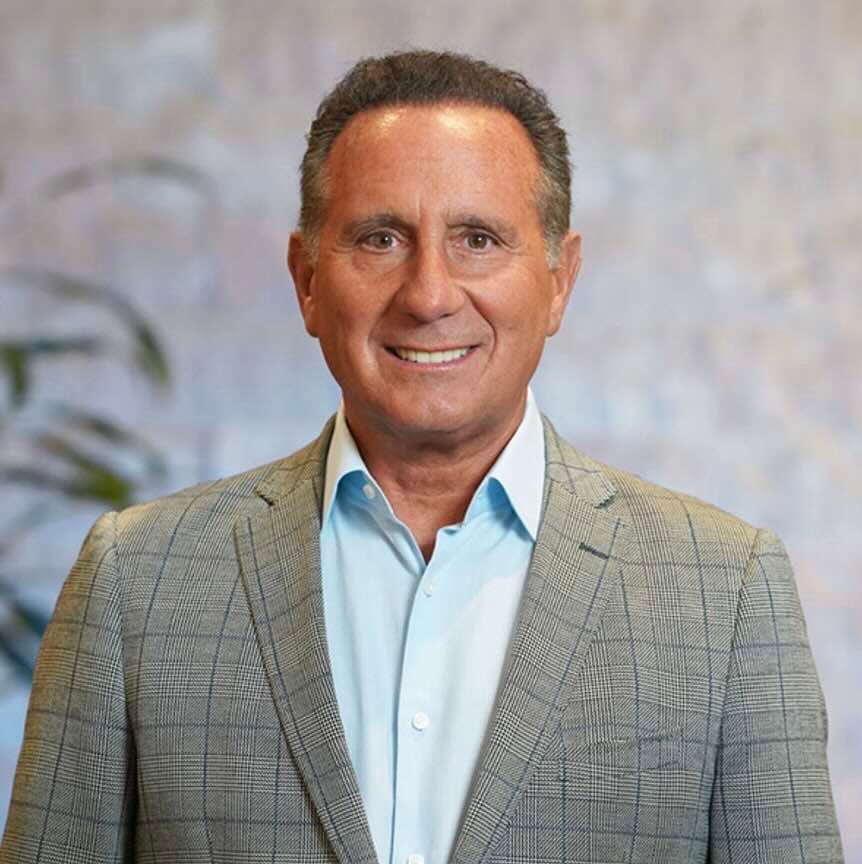
There’s more to the news than just the connector, too. “We’re coming out with a plug-in and a set of prebuilt skills,” Zepf says.
All of which is a bit of a departure from Syncro’s previously stated intention to go all-in on Microsoft in cloud, security, and beyond. Hard to blame the company for diversifying its bets, though, given that while Microsoft remains a player in AI (Copilot seats grew an impressive 50% from 20 million to 30 million just in the last quarter) Anthropic is an even hotter one, with more revenue in the last 12 months than Starbucks, McDonald’s, and Taco Bell owner Yum! Brands.
Of course, betting on Microsoft, Anthropic, or anyone else in AI only makes sense for an MSP toolmaker in conjunction with a service desk automation roadmap, and Syncro’s other major announcement on Tuesday will be the launch of its first AI-powered ticket triage and dispatch solution. It will join a ticket summarization system introduced about six weeks ago that has improved time to action on technical issues by 10% on average, according to Syncro. Both features will be accompanied in September by a “guided ticket resolution” feature that the company projects will resolve 20% of tickets autonomously.
Competitors are claiming bigger achievements in that area, but aren’t leaning into chatbot integration as heavily as Syncro. We’re about to learn just how much MSPs value the ability to do their AI-accelerated managed services work through the same AI interface they use for everything else.
How the rich get richer
The answers to questions like that matter, according to George, and not just to vendors like Syncro. In the not too distant past, he says, security know-how was what most separated the fastest growing MSPs from the herd. In the increasingly imminent future, it will be AI.
“All of these technologies—these frontier models, the adoption of agent-based solutions, MCP—will be the fastest separator and the greatest separator this industry has ever seen,” George predicts.
If he’s right, it’ll be AI-forward giants like New Charter and Integris along with AI-native newcomers like Shield, Titan, and Treeline that benefit the most. Indeed, such companies are already using in-house expertise smaller peers don’t have and can’t afford to build sophisticated, AI-enabled operating environments, according to Slide’s Carlson, who notes that those are the MSPs in that 5-10% of Slide’s partner base using MCP to access data directly from their own heavily customized tools.
“Some of these folks don’t even necessarily use our interface,” Carlson says. “They’ve built their own entire monitoring dashboard across all of their products.”
The largest of them enjoy other advantages too, as I learned last week in a conversation with Ben Bernstein (pictured), manager of the cybersecurity advisors unit at Huntress, during the Black Hat conference in Las Vegas. There are three advisors in North America at present, each of whom provides direct, expert advice to about 10 of the continent’s biggest MSPs. Helping those companies be “a little bit quicker and a little bit more efficient,” Bernstein says, is the core of his team’s mission.
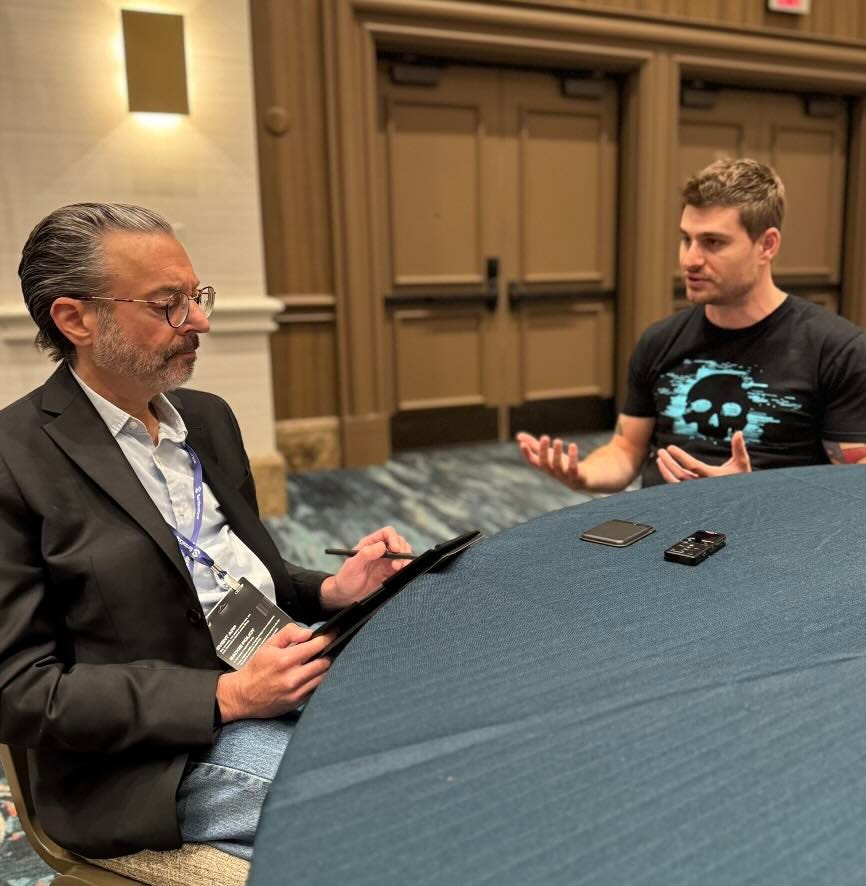
Kaseya and ConnectWise are paying closer attention to the needs of the biggest MSPs these days too, and for the same reason their MSP partners pay extra attention to their biggest clients—they spend more than everyone else. How much spending more and therefore getting more from strategic vendors revs up the AI flywheel already distancing mega MSPs from everyone else is still TBD. Stands to reason it will help though.
Lexful’s SaaSpocalypse insurance
I contributed to the SaaSpocalypse earlier this year.
As I mentioned some months back, I use a vibe-coded app written in Claude Code to run Channelholic’s editorial calendar. It costs me nothing to operate and serves my needs far better than the jerry-rigged Airtable system I’d been using previously.
So I canceled my Airtable subscription.
Which means I’m one small part of a series of events resulting in Airtable’s shocking decision last week to sell most of the company to Bending Spoons, the tech industry scrapyard purveyor currently wringing a few last remaining drops of value out of such once promising ventures as Vimeo, Evernote, and AOL.
What’s to stop companies more familiar to MSPs from the same fate? I suggested strength in risk mitigation and subject matter focus in a March post that would reference relationships too if I had it to write over again. Lexful, the AI-era system of record startup you last read about in February, is betting on the focus part of that equation for reasons best illustrated by something CEO Pinar Ormeci (pictured) experienced recently when she asked Anthropic’s cutting-edge Claude Fable 5 model to produce a dashboard for her showing daily active users, subscriber totals, and other critical metrics.

The result she got back was impressive, so she showed it to her head of operations, who soon asked her a question she couldn’t answer: where did that tenant count come from? Because it takes an API call into Lexful’s application to get that, and Fable doesn’t have API access.
Which didn’t slow the model down for a moment. It just made something up.
The problem, according to Ormeci, is that Claude is both eager to please and knowledgeable about everything except the all-important specifics that define you and your business. “The context window is simply too big for it not to hallucinate, or for you to trust that it will not hallucinate,” she says.
Narrower context alone won’t fix the problem, though. AI needs more than just MSP-specific data to give help desk technicians accurate answers. It needs clean, consistent, structured MSP-specific data, and if you don’t supply it, as we’ve just seen, it’ll fabricate something that looks right but isn’t.
Which poses an obvious problem for any MSP using LLMs to automate their help desk. “They’re not going to tell you we couldn’t find it or your data isn’t structured enough,” Ormeci says. “They’ll just give you very confident answers.” And it’ll be up to your technicians to determine if that confidence is warranted.
“Before they were wasting time searching for stuff,” Ormeci says. “Now they’re going to have to keep validating everything the AI is giving them, because you can’t trust anything that it’s saying.”
Which is why Ormeci isn’t worried about becoming the next Airtable. “You have to have a trusted structured knowledge foundation for AI to properly work,” she says. “That’s the fundamental problem that we are solving.”
Venture investors aren’t worried about Lexful becoming a SaaSpocalypse victim either, apparently. Two in particular, Top Down Ventures and York IE, recently committed $7 million of seed funding to the company, whose solution became generally available last week following a phased, multi-month test rollout.
“Our adoption numbers are not public, but I can tell you this: we have hundreds of MSPs in our ecosystem, either as customers or in our pipeline,” says Ormeci. How many more she’ll get in the months ahead depends on how trustworthy Lexful’s structured MSP data turns out to be.
GTIA says it’s lead or be led for the channel community
Let’s return to the channel community. One of the events I attended last week was GTIA’s annual ChannelCon show, a particular favorite of mine, in part because it’s the purest, least biased and agenda-driven expression of the channel community in action.
“It is the neutral ground where this industry comes together, takes on challenges, talks about challenges, and works together to better the entire industry,” says Dan Wensley (pictured), the association’s CEO. It’s also, as two major announcements the organization made last week underscore, an evidence source of growing maturity in the industry.
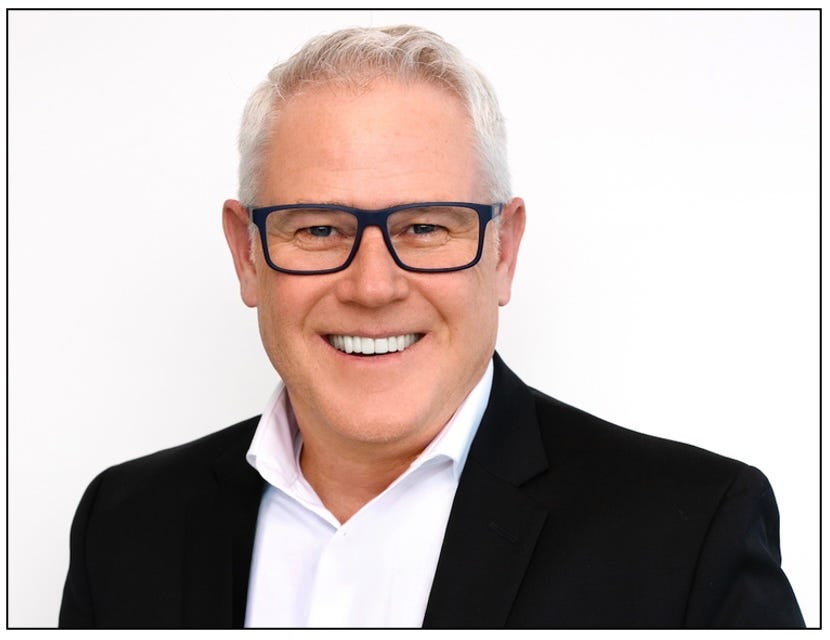
Wensley is a long-time executive at vendors serving the MSP community. MJ Shoer, GTIA’s chief community officer, is a former MSP. It took decades for them and people like them to accumulate the skills and experience necessary to recognize an opportunity to split CompTIA’s training business off from its community functions, sell the training part to private equity, turn the proceeds of that sale into a sizable endowment for a new community-only nonprofit, and begin using the endowment to accomplish tasks community members have long wanted to achieve but couldn’t.
Like establishing industry regulations. Competent MSPs have long been frustrated by incompetent, unprofessional peers giving their trade a bad name. If doctors, lawyers, and hair stylists, for goodness’ sake, have to meet qualifying criteria before going into business, why shouldn’t people responsible for securing and maintaining the IT foundation that makes all business possible be required to as well?
They’re not the only ones asking that question, either, per an article I wrote for ChannelPro nearly six years ago. State and local governments are as well. And whatever you think about state and local governments, let’s agree that they don’t know as much about managed services as managed service providers. Maybe MSPs rather than elected officials should be the ones to define what it takes to call yourself an MSP.
Groups like the National Society of IT Service Providers certainly think that should be the case. GTIA is now pursuing that goal as well.
“We’ve had these conversations for years, if not decades, about anybody being able to hang out a shingle and call themselves an MSP,” Wensley says. “Now we have to do it, or it will be thrust upon us.”
Shoer agrees. Regulations are coming one way or the other. “If we don’t act, the government eventually will act, and it probably won’t be good for the industry,” he says. “We either lead it or we get led by it.”
GTIA has opted to lead, and to do so in a way that takes the kind of resources its endowment makes possible. Starting in October, it will begin working with a group at Texas A&M University toward creating a self-regulatory organization, a managed services equivalent to independent but legally empowered groups like the American Medical Association, the American Bar Association, and the financial services industry’s FINRA. It will be a complex undertaking, but one that Texas A&M has successfully completed before for other industries.
“They have the knowledge, they have the skill set, they have the resources, they have a school of law, they have a school of government,” Shoer says. “They’re uniquely positioned.” But they don’t work for free.
“We need to pay Texas A&M to do the work,” he says. And there’s pretty much no one in the industry outside of GTIA that can both afford those fees and give everyone affected by that work a chance to participate in it.
“Because we are a trade association, every GTIA member will have a seat at the table,” Shoer says. “We’re ensuring that every organization gets access to the work early and has the opportunity to provide input so that it truly is representative of what the industry not only needs but wants.”
Same goes for another long-standing and closely related need in managed services: objective, enforceable standards, and more specifically, standards for delivering AI services. The new Managed Intelligence Alliance GTIA is standing up will define those both for and with those affected by them.
“The alliance itself, those members who participate in its formation, will set what’s the priority,” Wensley says. “Our job here is to support it both financially and structurally, and that’s what the board is committed to do.”
Again, it won’t be easy and it won’t be cheap. “GTIA is making a significant investment in this,” Shoer says, including by hiring an experienced, full-time director for the alliance.
Which, of course, is the kind of thing a mature industry represented by a mature industry association with some financial heft should do.
Want to hear more from Wensley and Shoer?
They both took time out to speak with us on MSP Chat, the podcast I co-host. You’ll find that episode here and a whole bunch of other equally good, IMO, episodes here.

IT By Design helps MSPs eat the AI elephant
I called GTIA the managed services world’s purest expression of community just now. I was wrong. The purest expression of community in managed services is when managed service providers tell other managed service providers about their biggest business challenges.
“They’re going to tell you an honest answer of how to fix it,” says Ahmed Fadili (pictured), chief strategy officer of Boston-based MSP Focus Technology, even if it means sharing the recipe to the secret sauce driving their own success.
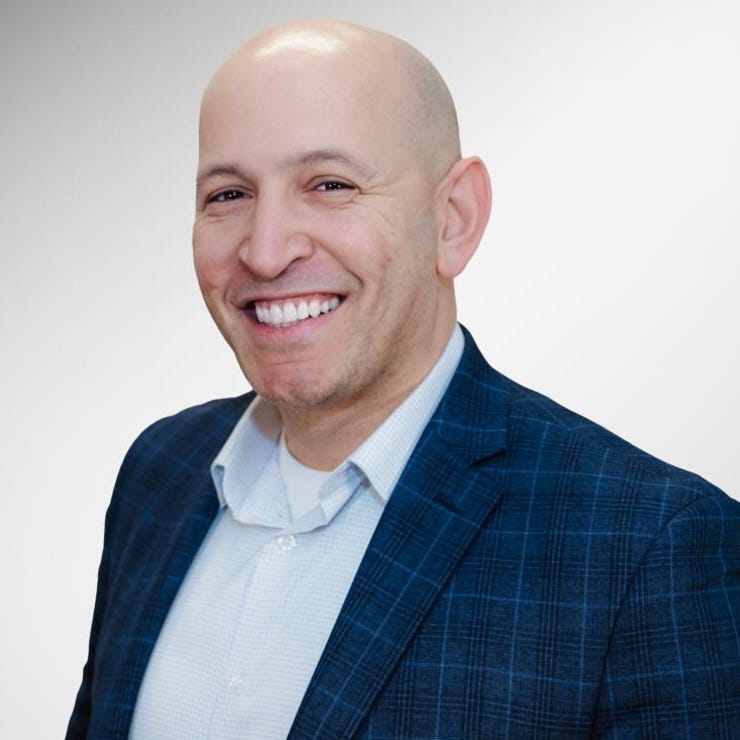
I’ve witnessed this dynamic before and got to do so again last weekend at a pre-day mastermind session hosted by IT By Design at its annual Build IT Live event in Jersey City, N.J., where a couple dozen MSPs, most of them strangers to one another, spoke frankly about the biggest business challenge facing MSPs in general right now: devising and executing an AI strategy.
“Customers are asking questions about AI. They’re expecting us to know AI,” Fadili says. “It’s something that we have to deliver on.”
Because, of course, those customers are searching for answers with or without help from their current provider. “They’re doing it themselves by building an in-house team or they’re hiring an AI-native MSP or AI company to do that,” says Sunny Kaila, IT By Design’s CEO. “It’s happening. It’s just you don’t know.”
And the fact that you couldn’t provide AI help to someone who asked for it is limiting the enterprise value of your business. Everyone knows that acquirers look carefully at EBITDA when evaluating MSPs, Kaila says. “What they’re not aware of is that there are other strategic plans that they can put in place to exponentially increase their enterprise value.”
Meaning strategic AI plans, of course, and life would be a lot easier for MSPs if creating them was as easy as wishing to. Unfortunately, for reasons both Pax8 and Fadili both well understand, it takes time.
“It’s not just something that you can create really quick,” Fadili says. “AI right now is a journey.”
For the client as well as their MSP, he adds, noting that Focus is assigning virtual chief AI officers to its customers to guide them through that journey while both parties figure it out together. This typically begins with an evaluation of the client’s AI maturity level, Fadili says. Kaila encourages all MSPs to do the same.
“Everything starts with the assessment,” he argues, before proceeding to governance, security, training, and eventually workflow automation. “It’s crawl, walk, run,” Kaila says.
Fadili shared part of his secret sauce recipe for navigating that progression with the Build IT Live mastermind group. Rather than treat AI preparation as a series of one-off projects, Focus sells it as a 12-month readiness engagement billed at flat monthly rates and followed by ongoing solution design, delivery, and management. That turns AI transformation into an operating rather than capital expense for the client and eases them through the AI journey gradually.
“How do you eat an elephant? One bite at a time,” Fadili says, noting that each bite is recurring revenue that strengthens the relationship between the customer and their trusted advisor.
Which, from Kaila’s perspective, is key. Embracing AI is at least as much a human-to-human story as an agent-to-agent story, he says, and always will be.
“We are in a people business, and that does not change with AI,” he says.
Over on The Business of Tech
Host Dave Sobel has thoughts from high-growth MSP Blue Mantis about AI readiness, security, and more. Hear what’s working and what’s not straight from CEO Josh Dinneen right here, and a lot of other enlightening episodes here.
Also worth noting
This story broke literally as I was interviewing Sophos channel chief Chris Bell at Black Hat: Sophos is partnering with OpenAI to bring frontier AI into cybersecurity products and services delivered through the channel. More to come.
The new Managed ESPM service from Huntress is designed to make application control and proactive endpoint hardening practical for MSPs and lean IT teams.
ConnectWise and SentinelOne are deepening their integration and partnering to deliver more automated, AI-powered managed cybersecurity capabilities to MSPs through the ConnectWise platform.
ESET has AI agent security, AI behavioral monitoring, and AI conversation security coming at the end of next month.
Cynomi and SPECTRA are partnering to help MSPs and MSSPs combine vCISO-driven security assessments and remediation with security warranties and cyberinsurance benefits.
Coro and Keepit have partnered to integrate Keepit’s SaaS data-protection capabilities into the Coro cybersecurity platform.
Cato’s new Agentic Threat Prevention service uses AI agents and unified network/security context to predict multi-stage AI-assisted threats and stymie their progress.
CrowdStrike’s 2026 Threat Hunting Report adds nuance to a widely discussed topic, calling AI a “tool, target, and force multiplier for adversaries.”
AvePoint’s new Kinetic Classification feature continuously adjusts sensitivity based on content, context, identity, and activity to help organizations govern data as they expand their use of AI.
Arctic Wolf has launched a cyber resilience service that combines SOC services with enhanced financial protection and incident-response support plus a new Cyber AI Readiness Accelerator.
SailPoint’s expanded unified identity security approach is designed to govern and protect human, machine, and AI identities through adaptive controls that combine identity, security, and data intelligence.
Proofpoint’s new OEM program enables technology providers, security vendors, MSPs, and platform companies to embed threat intelligence and detection capabilities into their own products and customer workflows.
Sumo Logic’s newly introduced Dojo AI agents strive to autonomously investigate and resolve security and cloud-operations issues using telemetry data.
CORE, a new AI era managed services offering from mega mega MSP Integris, combines IT ops, cybersecurity, cloud, data, AI, and strategic guidance on one bill. More coming to Channelholic soon.
Hatz AI’s new Hatz Activate offering is a command center that lets MSPs identify, invite, activate, and manage SMB AI customers at scale.
Atera has achieved ISO/IEC 42001 certification for its AI management systems.
Paul Constantine is the new chief engagement officer at channel consultancy JSG.