



Schadenfreude may not be the most attractive response to misfortune, but it can be hard to knock people for experiencing it sometimes.
Consider, for example, the 81% of managed service providers making less than $10 million a year at present, according to ConnectWise’s Service Leadership unit. Could you really blame them for taking a bit of pleasure in the fact that large, private equity-backed MSPs on the winning side of the AI-powered “flywheel” I wrote about recently are themselves on the losing side of an M&A flywheel?
Because almost all of them are, according to M&A consultant Abraham Garver, of FOCUS Investment Banking. “There are really now six super-sized MSPs,” he says, “and they’re kind of pulling away from the pack.”
It’s been just over a year and a half since I first outlined the forces producing a class of bigger-than-big MSP platforms with nine-figure top lines and competitive advantages that will be difficult—though not impossible—for others to overcome. Few of those dynamics has changed much in the intervening months.
MSP revenue, for example, continues rising. Managed services spending worldwide will climb by up to 10% this year to $635 billion, according to Omdia, and reach $950 billion by 2030, while some 59% of the over 1,100 North American MSPs surveyed by ScalePad for a just-published study are expecting 11% or better growth in 2026.
Investor appetite for MSPs is as strong as ever, moreover, according to M&A advisory Drake Star Partners, which tracked 123 transactions in Q4 of last year, up 14% quarter over quarter and 73% year over year.
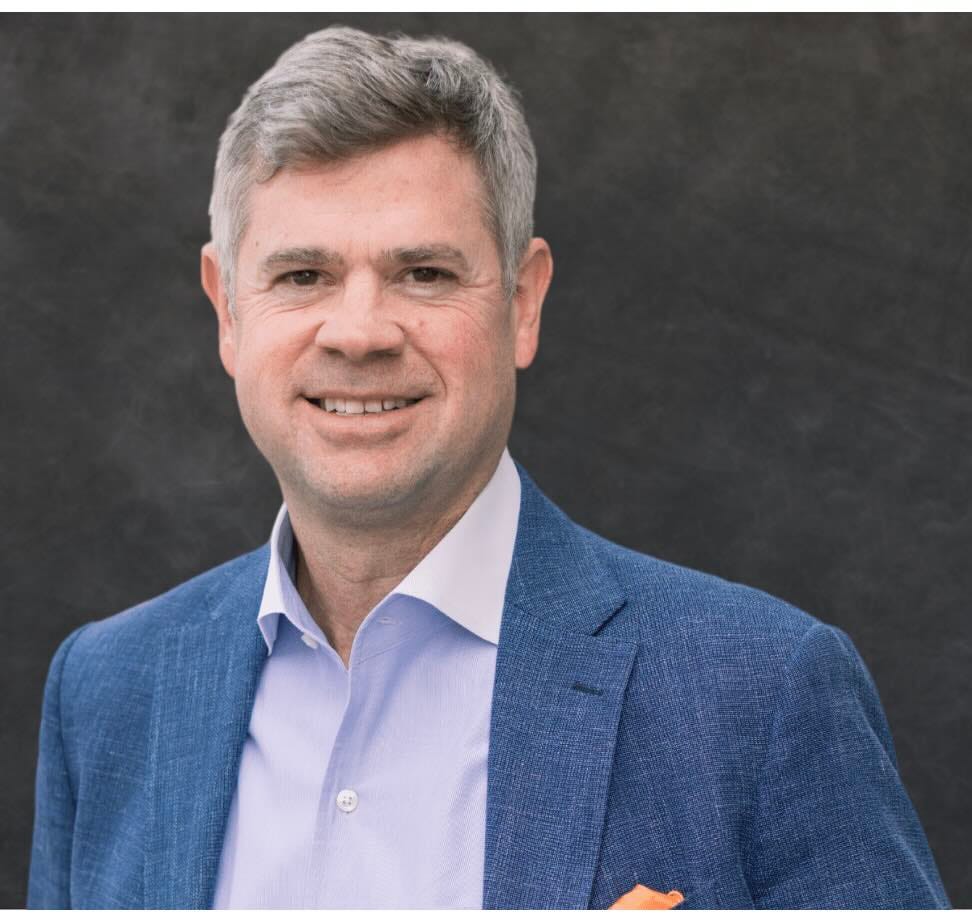
What has changed is the rise of an elite set of MSP giants even bigger than their bigger-than-big peers. Garver (pictured) prefers not to name them for fear of alienating current and potential clients who didn’t make his cut, but it’s not hard to hazard some educated guesses about a few of them.
Thrive, which bought five companies in 2025, was approaching $400 million in revenue as of last October on its way to what the company says will be $1 billion by 2029.
Integris, which is currently nearing $300 million a year, holds a similar ambition.
Evergreen Services Group was on pace to acquire 30 MSPs in 2025 according to a conversation with head of M&A Ramsey Sahyoun last November.
New Charter Technologies recorded three acquisitions last year and a fourth earlier this month to kick off what CEO Peter Melby says will be an “active first half of the year.”
In fact, all of the mega megas are likely to be active buyers this year and beyond, and some of the deals they sign will be substantial. According to Garver, there are currently about 75 PE-backed MSP platforms one tier below that top-of-the-pyramid cohort, all of which will sell in the next few years either to one of the big six or to one of the roughly 125 private equity groups on Garver’s radar that don’t yet own an MSP platform but want to.
Garver has suspicions about where some of them will end up. Despite having plenty of money to spend (venture capital and private equity investors are sitting on about $2.184 trillion in investable dry powder at present), PE firms vying to enter the market could be at a meaningful competitive disadvantage relative to the biggest existing platforms. For one thing, today’s MSP giants have money to spend as well. For another, existing platforms can realize post-purchase operational efficiencies not available to market newcomers.
“You don’t need two directors of HR,” observes Garver. “You don’t need two controllers.” Knowing they can part ways with those and other members of a freshly acquired platform’s administrative team following a deal and boost EBITDA more or less immediately, a mega mega can afford to bid millions more than investors buying their way into the market for the first time.
“They’re not going to enjoy the same synergies out of the gate, and they really can’t pay as much,” Garver says. The upshot, he continues, is an “unfair advantage” for the biggest of the big likely to result in a sizeable number of those 75 MSP platforms selling to even larger platforms.
Good, better, best assets for non-mega MSPs
Which, in turn, suggests that we’re likely entering an era of managed services history in which the top of the market is dominated by some genuinely gargantuan companies and everyone else is doomed, right?
Not so fast on the doomed part of that forecast, Garver says. The biggest of the big MSPs, he notes, won’t necessarily be targeting the same end users as everyone else. Integris, for example, aspires to provide high-margin, vertical-specific services to companies with the budget to pay for them, and Thrive isn’t interested in the small fry either.
“They will say when they put out their acquisition criteria that we have to make $5,000 of revenue a month per customer,” Garver says, and they’ll transition anyone who can’t clear that bar to a smaller MSP. That should leave plenty of business available for sub-$5 million firms to grab, he predicts.
Meanwhile, though sub-$5 million MSPs may not much interest the mega megas or medium megas beneath them as acquisition targets, somewhat larger providers will draw offers if they have what buyers currently want, which I’ll list in good, better, best order:
Good: Growth via M&A activity. Growth is always rewarded, Garver notes, but inorganic growth can be hard to sustain and predict.
Better: Growth via cross-selling and upselling. It’s a strong indicator of operational maturity, but often a one-time source of revenue.
Best (and not by a small amount): Organic growth via adding more customers. Again, all growth is good, Garver notes. “The most valuable growth is new logos.”
And the very best growth from new logos, he adds, is the kind produced by a team with a proven, repeatable process.
“Those machines that don’t require the founder CEO to be part of the selling are even more valuable, because the founder CEOs can step to the side when the business trades” without inhibiting growth, explains Garver, citing a FOCUS client that added 33 new logos in the year before it sold.
“Everybody and their brother wanted that organic growth engine,” Garver says.
The AI maturity M&A multiplier
So let’s stipulate, per Garver, that when it comes to exit valuations, nothing beats growth, especially if it results from landing new clients. What else helps? The answer, I’m almost sorry to say, is all but too predictable.
“Automation and AI aren’t bolt-ons for us,” says Integris CEO Glenn Mathis (pictured). “They’re built into how we design work and how we manage work.” And therefore, he adds, they factor “massively” into who Integris buys and how much it pays.

It’s not just Integris, either. “It’s probably the single biggest multiplier out there for an MSP,” said Kevin Lancaster, CEO of BetterTracker and Channel Program, of AI maturity during a recent episode of MSP Chat, the podcast I co-host.
Joshua Skeens, CEO of managed services heavyweight Logically, has a somewhat more nuanced take on the matter. If a potential acquisition knows roughly as much about AI as Logically does, it’s unlikely to get extra money.
“If they’re doing something that we’re not doing, then yes, it would definitely increase their valuation,” Skeens says, and especially if there are skills involved that Logically doesn’t yet possess. “If you can acquire a really good company with really good revenue, with customers and EBITDA and things like that, and extremely talented employees? Big win.”
Mathis agrees, in no small part because Integris regularly turns custom AI apps developed for its own use into new revenue streams. “A lot of those same automations, AI systems, and tools that we leverage internally, we can apply to a product or to a service that we then sell to a customer,” he says, just like the company did this past week in fact.
All of that said, Skeens notes, you’re not out of the running for a sale to Logically if you’re strong on everything that matters but weak on AI. “It’s almost a positive for us,” he says. “Now we can grow exponentially more because we can put our AI and automation in there.”
VC-funded rollup Shield Technology Partners, it’s worth mentioning, thinks pretty much the same way. The company actually prefers buying companies that excel at recruiting, retaining, serving, and satisfying customers but know little about AI automation, because that’s the kind of acquisition likeliest to experience hockey stick growth when Shield deploys the Palantir-grade AI it’s building.
Inherited chaos
OK, so growth makes MSPs more valuable and AI know-how can too under the right circumstances. What if anything makes them less valuable?
It’s a question that came to mind specifically in the context of security some time back when I read this post by the always interesting Ross Haleliuk. The context for his take on the topic, which is about how security best practices weigh on startup funding, is different, but the pattern he describes among private equity investors especially lines up pretty closely with how PE-backed MSPs think these days: get your security house in order if you want to command top dollar.
“We take that extremely seriously when we look at these acquisitions,” Skeens says. “Are they doing the right things? Do they understand security? How much legwork are we going to have to do when we go in just to secure the actual company that we’re acquiring, and then go back into their customers too?”
And to be clear, Mathis adds, the issue is your operational rigor, not how good your security software stack is. “We can scale tools, but we’re not interested in inheriting chaos,” he says.
Nor is anyone else, for that matter. Security chaos sells at a discount.
That podcast Lancaster was on? It draws interesting guests pretty often.
Like the team responsible for Cisco’s newly rolled out partner program, for example, the team behind Slide’s next-gen BDR solution, and the chief security officer of WatchGuard, to cite three recent examples. This week’s episode features Michael Assraf, founder of the open source MSP tool maker I wrote about last week discussing the company’s unconventional strategy at length in his own words. Well worth a listen, IMHO.

Also worth noting
Cisco has launched the new Cisco 360 Partner Program it told my podcast audience about a few weeks ago.
N-able has announced enhanced AI capabilities across endpoint management, security operations, and data protection. More on that here next week.
Syncro has added email security vendor IRONSCALES to the Syncro Marketplace.
Cork Cyber is now feeding some of its “superconnector” risk and compliance insights into ScalePad’s Lifecycle Manager X.
More open source for MSPs: Devolutions has inked a two-year sponsorship of the open-source remote control platform ControlR.
MSP360 now offers free backup protection of unlicensed Microsoft 365 shared mailboxes.
Ivanti has added AI-driven enhancements designed to automate, optimize, and secure IT and security operations to its Neurons platform.
Fortinet’s FortiCNAPP Cloud Risk Management solution now unifies network, data, and runtime risk context to help security teams prioritize multiple risks in one workflow.
Keeper Security has extended its zero-trust privileged access controls to Slack.
Commvault has expanded its data protection, security, and resilience capabilities for Google Cloud.
The agents are coming, and we’re soooo not ready: 79% of IT professionals currently feel ill-equipped to prevent attacks via non-human identities, according to the Cloud Security Alliance and Oasis Security.
Also not good: Two-thirds of security leaders say they lack integrated security tooling like SIEM and SOAR products, according to Sumo Logic, suggesting there a lot of holistic observability gaps out there.
Ayman Antoun is the new CEO at OpenText.
Michelle Curtis is the new CRO at mega MSP New Charter Technologies.
Harlan Parrott is the new VP of AI innovation at KnowBe4.