



Well, that didn’t take long.
My first post of the new year included these five observations:
1. “Systems of action” pose a potential threat to “systems of record”, because while the latter accelerate the expensive work done by expensive humans, the former just plain do it.
2. PSA solutions are systems of record for MSPs.
3. There are a lot of startups building MSP systems of action that could disintermediate or even displace those PSA systems of record.
4. Developing a system of action in response to that danger isn’t easy for PSA vendors juggling a lot of other balls.
5. I’m not much into new year prediction lists. But:
Were I to make a prediction for 2026 in this season of prediction lists … it would be that at least one of the AI-native startups I’ve been writing about has been acquired by a name-brand RMM/PSA vendor by this time next year.
Looks like I should have said this time next month now that ConnectWise has acquired zofiQ, a system of action startup I’ve written about here in the past.
Really, though, I can’t take too much pride in getting this right. It was kind of an easy call given the bedrock reality that anyone offering system of record functionality to MSPs can’t afford not to offer system of action functionality as well. Just ask ConnectWise CEO Manny Rivelo (pictured).
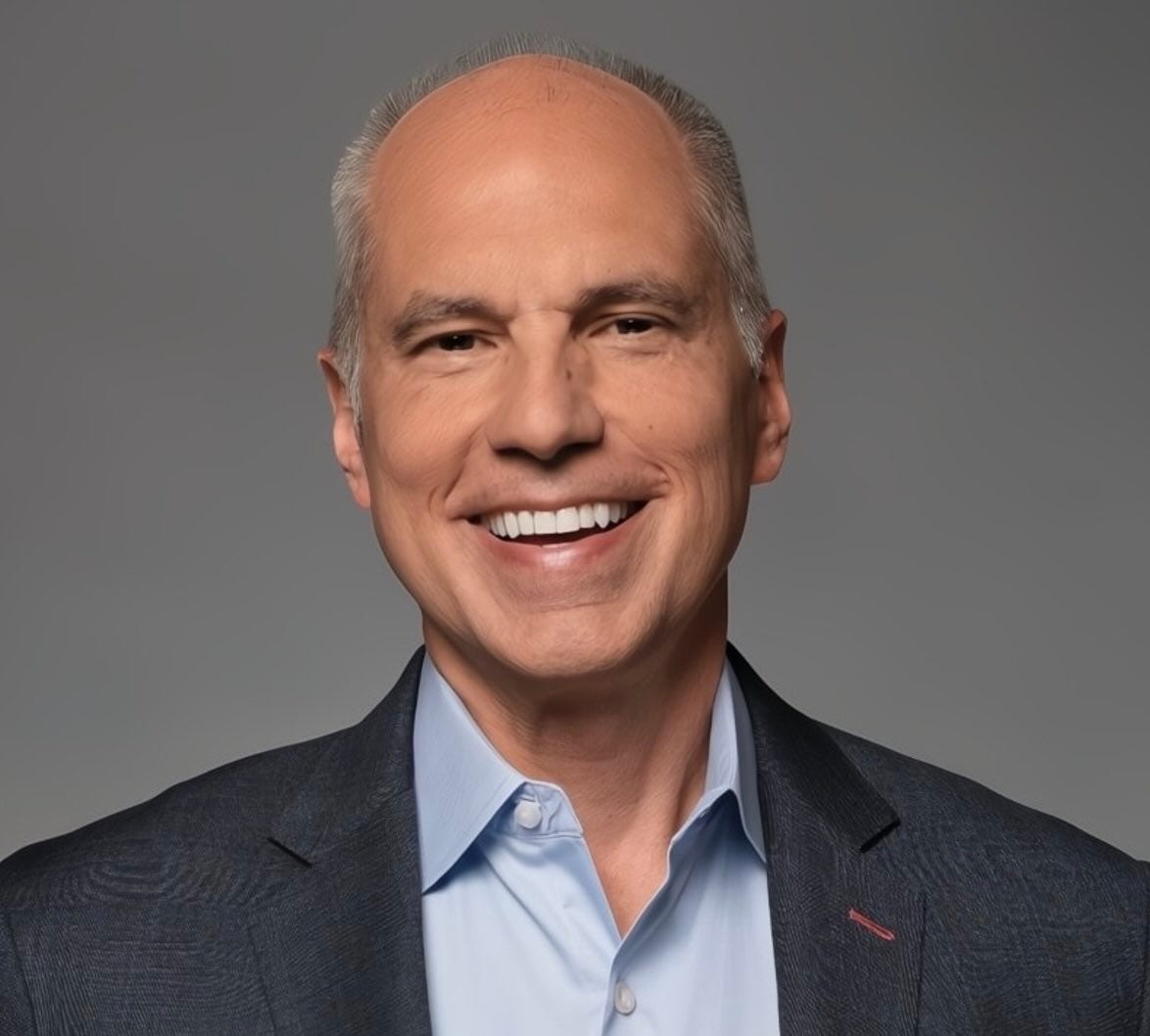
“It’s core to what we believe you need to have in a platform,” he says. “All software needs to be intelligent as we move into the new era.”
True enough, yet building something as sophisticated and unfamiliar as AI-powered service desk automation software from scratch takes time for vendors like ConnectWise relatively new to the field. Much faster, at a moment when AI has made speed more important than ever, to buy a company that’s been thinking about nothing but AI-powered service desk automation for several years instead.
Again, don’t take my word for it. ConnectWise has been working on AI service desk functionality internally for a while. According to Rivelo, though, purchasing zofiQ will get the job done as much as “a couple of years” sooner.
“It accelerates our trajectory significantly,” he says, adding that the specific way zofiQ designed its solution will accelerate the trajectory of agentic AI service desk adoption among ConnectWise partners as well. Unlike systems that require post-installation training and development, zofiQ’s software automatically ingests ticket information in an MSP’s PSA solution, analyzes it, and then spits out a production-ready agent.
“It’s self-trained on the backend,” Rivelo says. “There’s no developer work required, and you get an agent in hours or a day.”
So, yeah, if you’re ConnectWise or one of its primary competitors it can make good sense to buy an AI startup that already has what you want rather than build a solution all by yourself.
Furthermore, one might add, if you are going to buy an AI startup, it helps to buy one that makes the most valuable part of your legacy system of record—the single, comprehensive source of truth offered by its deep foundational data lake—more relevant rather than less. ConnectWise evaluated several dozen vendors, notes David Raissipour, the company’s chief product and technology officer, most of which base their AI output on LLM input. zofiQ, by contrast, employs a small language model integrated with the user’s PSA system, resulting in what ConnectWise says is higher resolution success rates.
“Where the LLMs generally top out in the low 70s percentile accuracy, which is lower than a competent human doing it, a small language model approach that constantly learns and adapts to drift and changes in behavior and workflow and the types of tickets achieves mid-90 percentile or higher, which means greater than human accuracy,” Raissipour says.
Rivelo points to one last consideration in zofiQ’s favor: If you’re going to buy an AI-native system of action startup with a product strategy inextricably wedded to your legacy system of record, you might as well buy one that you know MSPs like.
“They have dozens and dozens of partners,” he says.
Not every PSA vendor will follow the same train of logic that brought ConnectWise to purchasing zofiQ, of course. But as long as I’m playing a hot hand on predictions right now, here’s prediction two for 2026: ConnectWise may be the first MSP system of record vendor to acquire a system of action startup, but it won’t be the last. Everyone who makes SoRs for MSPs must add SoA capabilities, and buying them is the quickest way to do so.
Mulling what’s next
So where does this week’s news leave ConnectWise’s competitors on the one hand and AI-native automation startups not named zofiQ on the other?
Let’s start with the competitors. Rivelo advises them to do something about AI service desk automation too.
“2025 was the year of the LLM, for lack of a better word. 2026 will become the year of the application becoming intelligent, and I don’t think you’ll exit ‘26 or for sure ‘27 with dumb SaaS applications,” he says. “Everybody will have to follow suit organically or inorganically.”
And by everybody he doesn’t just mean PSA vendors, because ConnectWise plans to embed zofiQ’s technology deep within Asio, the platform underlying nearly all of its portfolio, where it will eventually infuse agentic AI into everything ConnectWise makes.
“Think about RMM and what we could do with security,” Rivelo says. “We can move it into the backup and disaster recovery space. We can move it into the documentation or the customer sentiment space and build agents for all of that.”
Which brings us to the many AI-native startups I’ve been writing about. Venture capital firms evaluating an investment often ask themselves if the company they’re thinking of funding makes a platform, product, or feature. zofiQ, until very recently, made a product. Now it serves as a platform-level feature, which Raissipour believes will give ConnectWise an edge over vendors offering stand-alone, third-party products with similar capabilities.
“When you integrate something into the platform, there’s an inherent advantage, because you have access to data sources, you have access to notifications and events that happen on the backend,” he says. “There’s always a natural latency when you try to get that through APIs.”
I haven’t discussed any of this with zofiQ’s ex-competitors, but I think I know how many of them would respond. Thread, for example, firmly believes that deploying AI service desk software successfully takes direct vendor assistance.
“You can’t just go to our website and buy our product,” observes Bobby Jacobs, the company’s head of growth, on the podcast I co-host. “We make you go through an onboarding process where it’s four to five sessions with consultants on our side.” A great onboarding, he adds, takes 30 days typically.
Similarly, both Everest, a startup I profiled here recently, and Shield Technology Partners, a hybrid AI software maker/MSP rollup, send Palantir-esque “forward deployed engineers” to guide users through implementation and optimization, for reasons Shield head of strategy and growth Raghav Kotha outlined elsewhere in Channelholic recently:
“The large vendors in the market tend to build generalized products for the broader IT services audience … We start by embedding our product and engineering teams directly into our partner operations so that they can get a better understanding of their goals and tailor solutions that fit their existing needs. Our goal is to create technology that feels like an extension of how our partners already work.”
That hands-on, onsite model is a hard one for companies like ConnectWise to scale across thousands of partners, but could be exactly what larger MSPs with bespoke business processes and deep pockets demand.
Want the inside scoop on MSP systems of action?
Check out that episode of MSP Chat I just referenced, which includes an interview not only with Thread’s Bobby Jacobs but with Thread founder Mark Alayev as well. Other recent guests on the pod, interestingly enough, include zofiQ CEO and co-founder Lee Silverstone and ConnectWise CEO Manny Rivelo. Plenty more where all that come from here.

To build or to buy? That is the question increasingly for MSPs
I mentioned a few weeks ago that I vibe coded an application for the first time over the holidays. More recently, inspired by the buzz about Anthropic’s Claude Opus 4.5, I coded another, and there are more coming. I wouldn’t say I’ve been “Claude-pilled,” as some call it, but it’s close.
And can you blame me? I’ll use this latest system, after a few finishing touches, to manage Channelholic’s editorial calendar, something I’m doing at present in a jerry-rigged Airtable app that’s functional but not much more. The app Claude made for me, by contrast, looks and works like commercial-grade software, is entirely tailored to my workflows, and has taken me maybe two hours to build so far.
Unlike Airtable, moreover, it costs me a whopping $0 a month to use.
Keep in mind that I’m not exaggerating when I say I couldn’t write a line of programming in any language you name to save my life. I really don’t know how to code. Yet that really no longer matters.
“That’s the different world we’re all starting to live in right now, where any of us can just go type into a website what we think we need from a tool, and it can create an 80% structure of that tool for us,” says Joshua Skeens (pictured), CEO of managed services heavyweight Logically. “I think you’ll see a lot more of that.”

So do I, and if we’re both right the implications for MSP software vendors are profound.
“That buy versus build equation has fundamentally turned upside down,” observes Kevin Lancaster, CEO of BetterTracker and Channel Program, during a recent podcast interview. Historically, it’s pretty much always made sense to buy solutions given how much time and money building them would consume.
“Today, it’s almost parity in a lot of cases,” Lancaster says. “It’s probably in some ways more cost-effective to build some of these newer capabilities because of the tools that are out there.”
Now realistically, no MSP is going to ask an employee with zero development experience to vibe code a mission-critical business application. But the same tools that have made my software projects possible will make building solutions you’d otherwise have to buy a real option for someone with some programming know-how.
That’s already happening, in fact, at Logically, where engineers are using AI coding tools to create AI automation solutions, rather than license software from startups still perfecting their products.
“We can build some of this technology in ways that help us today, rather than trying to help another company figure it out,” Skeens says.
AI SOC technology is an example, he continues. “Almost every one of what we consider L1 alerts from a SOC now is completely automated and looked at through automation and AI. Our team barely even looks at it,” Skeens says. “There was nothing off the shelf that we could go buy that would do that for us.”
Glenn Mathis, CEO of mega MSP Integris, came to a similar conclusion some time back when he began investigating AI automation vendors. “They typically are building for the lowest common denominator,” he says, noting that at nearly $300 million top line, Integris has very different requirements.
“The vast majority of MSPs in this country are not platforms. They’re really small MSPs, and the problems that they have with their customers or the scale at which they built their business is very different from mine,” Mathis says.
Which is why Integris has created an AI center of excellence tasked with identifying internal processes ripe for automation. “We’ve invested lots of our resources into this,” Mathis says, noting that it’s getting a lot of return on that investment too. “It saved us dozens of thousands of hours just last year alone.”
In part, he adds, because the software Integris builds meets the firm’s exact needs. “I’m not going to say there aren’t things we will buy and there aren’t things we will partner with, but a lot of things are going to be built by us because we know our customer better than anyone else,” Mathis explains.
Neither Mathis nor Skeens, it’s worth noting, expects to build every system it uses someday. “Over time, it just costs too much money to keep those tools updated and running,” Skeens observes. But some amount of money that might otherwise have flowed to outside vendors will now flow to his dev team instead.
Also worth noting: It will be hard for a lot of MSPs to do the same. “I have 900 people, almost, in my business,” Mathis says. “I can certainly afford to build a department around this.” But if smaller MSPs don’t want to get flattened by the AI flywheel, he adds, they should at least be thinking about how much buy they can replace with build going forward.
“I don’t think an MSP can avoid it,” Mathis says. “You have to dedicate resources to this.”
Shameless plug alert!
Skeens will be joining me and Daniel Gonzalez, head of technology and AI at Shield Technology Partners, for a panel session I’m moderating on “DIY AI” for managed service providers at the Channel Partners Conference & Expo/MSP Summit in Las Vegas this April. Details here. Use promo code “FREEMAN” at registration for discounted entry.
Also worth noting
Sophos rolled out Workspace Protection, a protected browser solution designed to secure hybrid work and prevent shadow AI.
All-in-one security vendor Guardz appointed channel superstar (and Pax8 VP) Rob Rae a strategic advisor.
Os Haque is the new vice president of global channels at CyberFOX.
Keeper Security announced instant account switching and passkey enhancements across its mobile apps and browser extension.
The new edition of Vectra AI’s flagship platform is designed to deliver preemptive and proactive defense against AI-powered cyberattacks.
D&H acquired Fulfillment.com to extend its third-party logistics capabilities.
MSPAlliance expanded its member insurance offerings through a partnership with UKON.
Extreme Networks launched its Extreme Partner First program, which offers unified rebates, clearer pricing, faster deal registration, and AI-enabled growth tools.
ServiceNow added a redesigned Build Program with simplified pricing and expanded support to its global partner program.
This spells opportunity for MSPs: 43% of leaders surveyed by Precisely cite data readiness as the most significant barrier to AI alignment with business.
ControlUp introduced a new multi-tenant platform and partner program aimed at helping MSPs automate endpoint management and improve service quality.
GoTo added new AI-powered tools to GoTo Connect for Automotive to help auto dealerships answer more calls, automate service scheduling, and drive revenue.