


Forgive me for leaving this last part until the end as if it doesn’t matter as much as what preceded it, because I think it matters a lot.
An ISC2 blog post published two weeks before RSAC shared details from the association’s most recent Cybersecurity Workforce Study about the role women play in that workforce. As I’ve written before, that role is way too small. Indeed, just 16% of participants in ISC2’s study were women, a number all too consistent with input from survey respondents that 21% of cybersecurity teams are 10% female or less and that 14% of teams have no women at all.
It speaks volumes about how accurate ISC2’s data is that of the 20 people I interviewed at RSAC, precisely one—Michelle Hodges, Barracuda’s senior vice president of global channels and alliances—was a woman. She’s the one I chose to ask about the gender gap in security and what can be done about it.
“I’m in the latter half of my career, not the last chapter but the latter half of my career, and when you get to this stage you start to reflect on what’s really important to you and what drives you,” she said. For her, getting more women involved in the security industry is a big part of the answer.
“I feel that I have a responsibility to share my experience and also to continue learning from women in cyber and in technology to be able to pay it forward for future generations,” Hodges (pictured left) says.
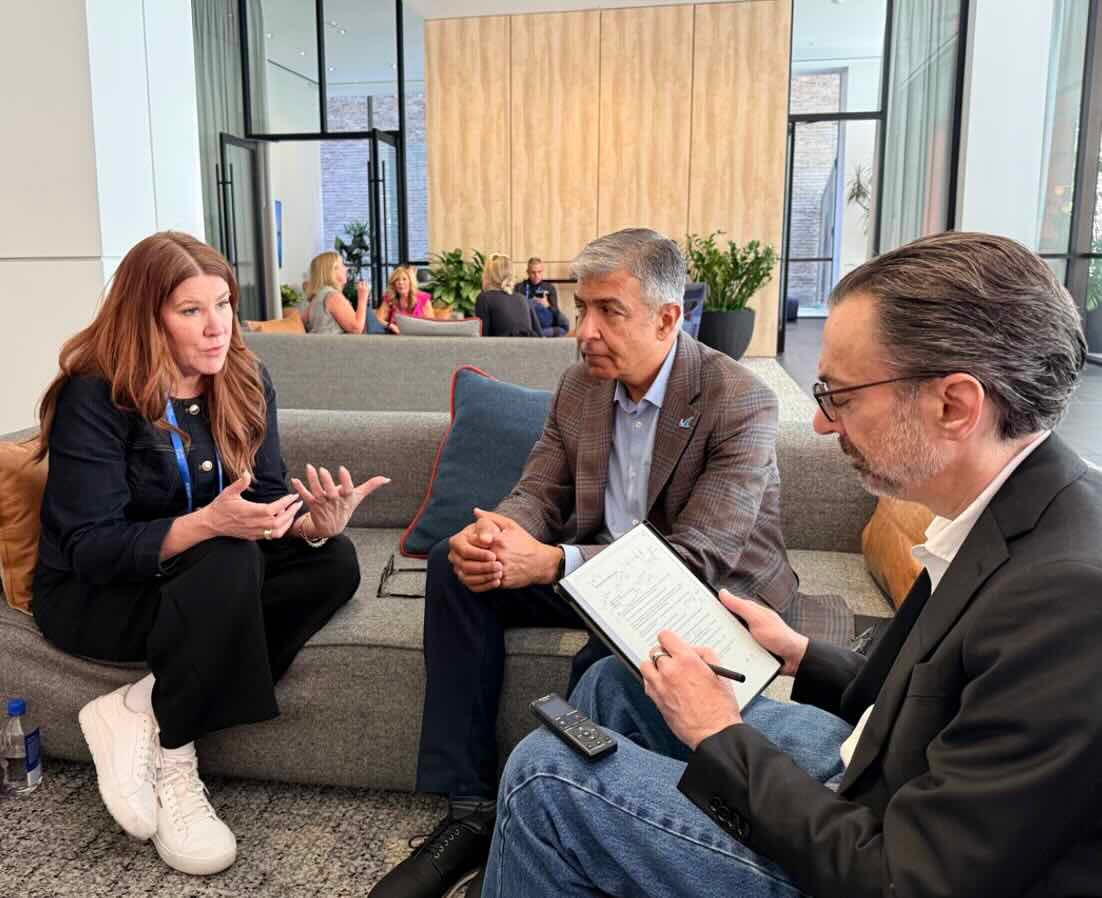
Working with HR teams and boards to keep women from exiting the workforce is one way she acts on that responsibility. “You might be a carer, you might be a mother, lots of different things, and the environment that you start in might not be conducive to some of them,” Hodges notes. Helping security vendors be more accommodating is a top priority, she says, as is helping women appreciate the existence of career paths in security that fit well for caregivers.
“Particularly if you’re an engineer, you don’t need to leave the workforce because that culture might not be good,” Hodges observes.
Helping men in security be better allies to women is another focus area, she says, noting that some of that work is no more complicated than making men aware of what female colleagues often endure at work.
“We did a roundtable at this breakfast where we had women responding to questions about what is their experience like, and even the most woke of guys was like, ‘Really? That’s your experience?’”
There’s a lot more we all can contribute. Diving into ISC2’s data on the topic is a good place to start.