



The thing about communities like GTIA is that the members have a pretty good idea of who’s there to give and who’s there mostly to take. The same goes for the MSP community more broadly in relation to vendors. People can tell who means it when they say they’re committed to partner success and who says it because it sounds good. They reward vendors in the former camp with their business and loyalty.
The latest evidence came our way last week courtesy of Slide, the BCDR startup founded by Datto veterans Austin McChord and Michael Fass, which you’ve read about here a few times since its first product reached market last February. The company made headlines last week in conjunction with a $70 million Series B funding round and the revelation that its nearly 1,000 MSP partners have sold roughly 4,000 devices in about 13 months.
Slide’s leadership is very proud of those devices, but they’re also quick to describe them as part of a larger, culture-level commitment to MSPs at the company.
“We spent almost two years in the lab building the tech that is delivered through Slide,” Fass (pictured) says. “That’s not because we were curious. It’s because we’re passionate. It’s because we care about MSPs, we are MSP focused, and we bring every ounce of passion that we can to the project.”
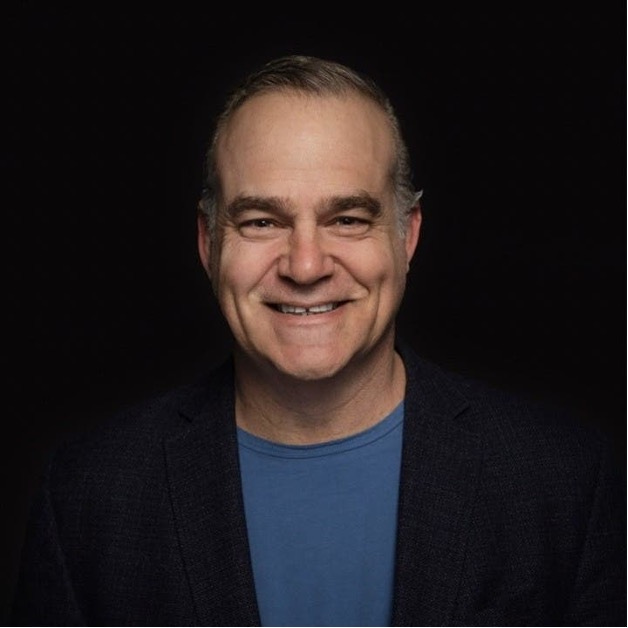
There’s no way to know for sure, of course, but I’d wager heavily that the degree to which MSPs feel that passion, in and beyond Slide’s products, has a lot to do with how Slide attracted 1,000 partners—a milestone that MSP favorite NinjaOne needed 18 months to reach—in a touch over a year.
Fass points to several ways MSPs can see Slide’s “deeply empathetic” approach to MSPs in action, including its month-to-month pricing (something MSPs love and few vendors offer) and its refusal to sell direct to end users, even when (as actually happened not long ago) one of them tries to place a 250-appliance order.
“Regardless of the deal size, what was important to us was holding to that core value,” says Carlson Choi, Slide’s COO. “Even if we lost the bid, right? It’s the right thing to do for the channel.”
Interestingly enough, VC fund General Catalyst, which led Slide’s Series B, specifically called out the company’s commitment to doing right by the channel as a reason for its willingness to invest in the company.
“Michael, Austin and the team understand the MSP community at a foundational level and are rebuilding a critical category with modern architecture and long-term conviction,” said General Catalyst partner Mark Crane in the press release announcing the funding round.
Fass calls the scale of that round a sign that despite turmoil, trouble, and uncertainty in various corners of private capital, investors remain bullish on managed services.
“The investor community is seeing that there is a massive untapped market for great technology delivered by MSPs through MSPs to tens of thousands of small to medium-sized businesses across the globe,” he says. “We are, in some ways, a good proxy for that.”
Wait, what about platformization?
Humility is an admirable trait in my opinion, so let me display a little here. I’ve made the case before that MSPs prefer platforms to point solutions, so much so that it’s a rough time right now to be a maker of stand-alone anything, and especially stand-alone data protection.
Unless, apparently, you’re Slide, which is and intends to remain 100% focused on backup.
“Our commitment is to build an MSP technology company focused on backup solutions,” Fass says.
Though not exactly stand-alone backup. “Our mandate is to backup data wherever it lives,” Fass says. “We’ve got a big horizon of solutions that we’ll be coming down the pike with over time.”
Sounds like a data protection platform along the lines of what Veeam’s building. Is it? If so, then maybe Slide will turn out to be less the exception that proves the platformization rule than simply yet another example of the platformization rule in action.