



I travel a lot, so I recently created a skill in ChatGPT to automate trip planning. I simply tell it where I need to be and when, and based on a lot of information it has about my preferred airline (Delta), preferred hotel chain (Hilton), seating preference (window, please), and the like it books a whole itinerary for me with very little assistance.
Sounds great, right? It is, usually. Last week, though, I arrived at a hotel the agent had booked for me in Manhattan and got a puzzled question from the guy at the check-in desk.
“It’s just you?” he asked. Yes, I replied. “Then why did you book a quad?”
Wondering what a quad is? So was I. Here’s the answer:

That was my home away from home for two nights, as well as a helpful reminder that while AI grows more useful by the week, if not day, you still can’t trust it to get even simple things right 100% of the time.
As it happens, Peter Melby, CEO of New Charter Technologies, had flagged the importance of trust in AI two days earlier during a panel session I moderated at the MSP Summit in Orlando. Like all four companies represented onstage, New Charter is spending growing amounts of time designing, developing, and delivering increasingly autonomous AI solutions for its clients. According to Melby, the process usually includes a conversation about pain points and business goals, but doesn’t start there. It doesn’t start with the security and data readiness work that precedes successful AI deployments either.
“It starts with trust,” he says. Meaning you’ve got to earn the right to build something autonomous for a customer by first winning their confidence, in you, in AI, and in agentic AI more specifically.
Omnissa sees things the same way, so much so that the theme of its Omnissa ONE conference in Orlando, 10 minutes up the road from the MSP Summit, was “Trust is built. Autonomy follows.”
The autonomy Omnissa was talking about isn’t the one MSPs pursuing agentic AI typically have in mind. Spun out of VMware in the wake of that company’s sale to Broadcom, Omnissa is a maker of virtual desktop, virtual app, and endpoint management software dedicated to building “digital workspaces” that configure, secure, and heal themselves dynamically in AI-enabled, context-based ways. MSPs, by contrast, are increasingly using autonomous apps to manage help desks and digitize end user workflows. The common thread in both cases is an understanding that no one will deploy autonomous anything until they know it’s trustworthy.
Hence one of Omnissa’s biggest announcements last week (along with hiring a new CEO): the launch of Elara, a governance solution designed to help businesses monitor and control autonomous environments, and in doing so build trust in a new and potentially powerful use case for virtual desktops.
The original and still most popular use cases will be familiar to anyone in IT. For end users, they include anywhere, anytime access to their corporate workspace on any device. For IT departments, notes Renu Upadhyay (pictured), Omnissa’s SVP and CMO, they mostly concern security and efficiency.
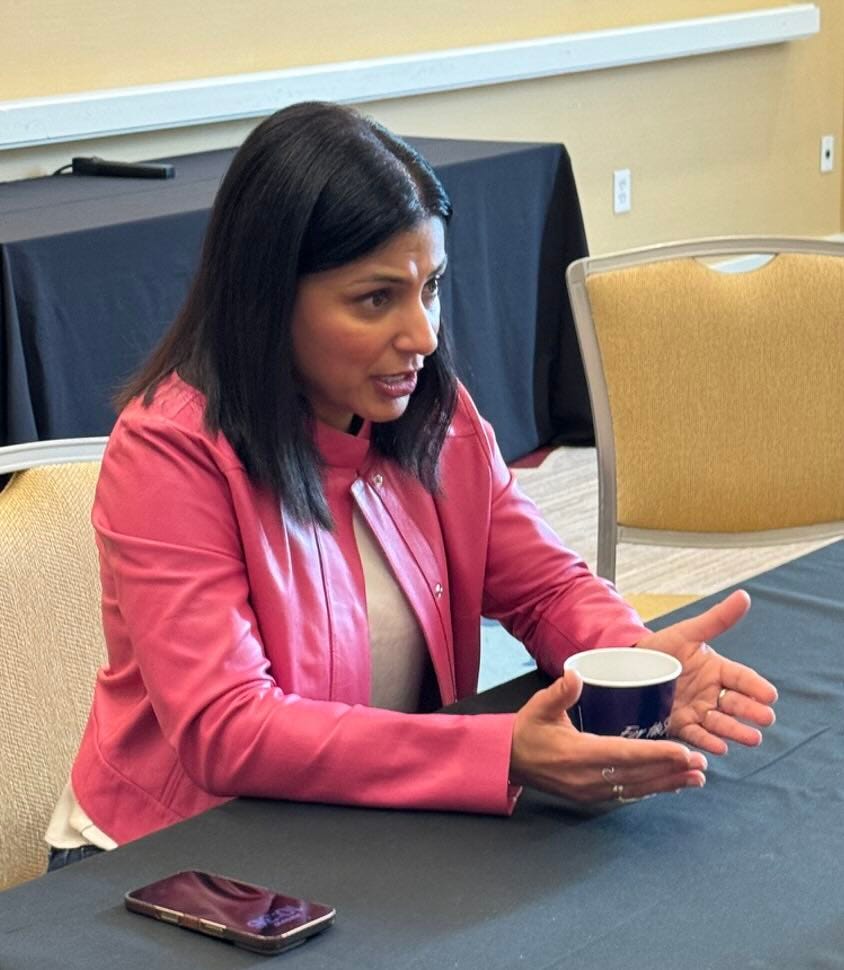
“The image is locked down,” she says. “You can batch things. You’re doing it once in the cloud, and it’s delivered everywhere.”
All of which remains as relevant as ever to a new set of digital, rather than human, end users. Virtual desktops may not be sandboxes, per se, but they are containerized in ways that make deploying agents in them safer and monitoring what they’re up to easier.
There are other advantages too. An agent running in a cloud-based virtual desktop can keep running nights and weekends even when your physical endpoint is shut off. IT teams can conserve precious compute resources by spinning up “non-persistent desktops” when they’re needed and then spinning them back down when they’re not anymore.
All of which should sound good to anyone supporting users eager to deploy more agents more quickly, including MSPs. “You don’t want to say no,” Upadhyay observes. “You want to say yes.” A virtual desktop, she notes, lets you do so in a way that maximizes effectiveness and minimizes risk.
“It’s connected to the other systems that you use for your job. It’s secure. It’s contained,” Upadhyay says.
And you can bill people for administering it just like you would any other device.