



I spent last week at three conferences in as many cities on two coasts exploring the interplay between AI and community. One of them was GTIA’s annual ChannelCon show, a particular favorite of mine, in part because it’s the purest, least biased and agenda-driven expression of the channel community in action.
“It is the neutral ground where this industry comes together, takes on challenges, talks about challenges, and works together to better the entire industry,” says Dan Wensley (pictured), the association’s CEO. It’s also, as two major announcements the organization made last week underscore, an evidence source of growing maturity in the industry.
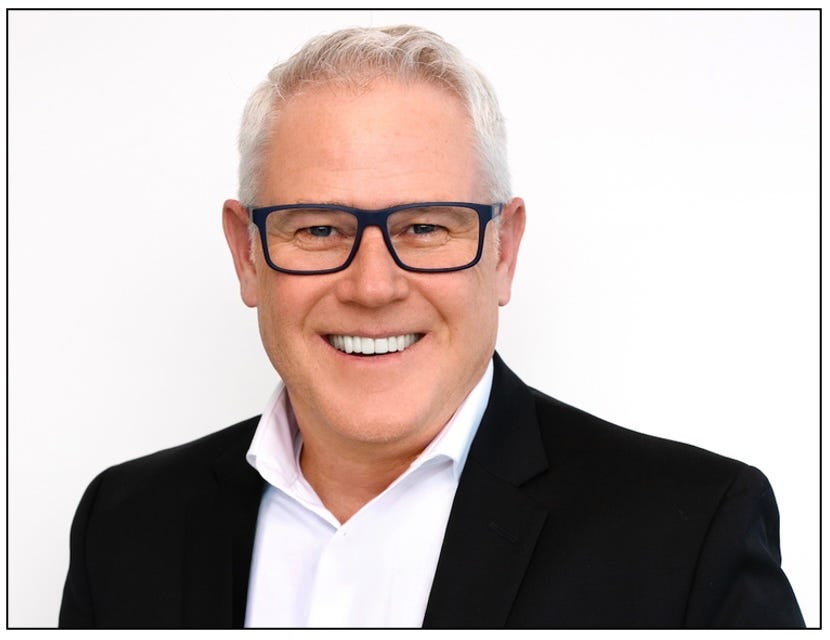
Wensley is a long-time executive at vendors serving the MSP community. MJ Shoer, GTIA’s chief community officer, is a former MSP. It took decades for them and people like them to accumulate the skills and experience necessary to recognize an opportunity to split CompTIA’s training business off from its community functions, sell the training part to private equity, turn the proceeds of that sale into a sizable endowment for a new community-only nonprofit, and begin using the endowment to accomplish tasks community members have long wanted to achieve but couldn’t.
Like establishing industry regulations. Competent MSPs have long been frustrated by incompetent, unprofessional peers giving their trade a bad name. If doctors, lawyers, and hair stylists, for goodness’ sake, have to meet qualifying criteria before going into business, why shouldn’t people responsible for securing and maintaining the IT foundation that makes all business possible be required to as well?
They’re not the only ones asking that question, either, per an article I wrote for ChannelPro nearly six years ago. State and local governments are as well. And whatever you think about state and local governments, let’s agree that they don’t know as much about managed services as managed service providers. Maybe MSPs rather than elected officials should be the ones to define what it takes to call yourself an MSP.
Groups like the National Society of IT Service Providers certainly think that should be the case. GTIA is now pursuing that goal as well.
“We’ve had these conversations for years, if not decades, about anybody being able to hang out a shingle and call themselves an MSP,” Wensley says. “Now we have to do it, or it will be thrust upon us.”
Shoer agrees. Regulations are coming one way or the other. “If we don’t act, the government eventually will act, and it probably won’t be good for the industry,” he says. “We either lead it or we get led by it.”
GTIA has opted to lead, and to do so in a way that takes the kind of resources its endowment makes possible. Starting in October, it will begin working with a group at Texas A&M University toward creating a self-regulatory organization, a managed services equivalent to independent but legally empowered groups like the American Medical Association, the American Bar Association, and the financial services industry’s FINRA. It will be a complex undertaking, but one that Texas A&M has successfully completed before for other industries.
“They have the knowledge, they have the skill set, they have the resources, they have a school of law, they have a school of government,” Shoer says. “They’re uniquely positioned.” But they don’t work for free.
“We need to pay Texas A&M to do the work,” he says. And there’s pretty much no one in the industry outside of GTIA that can both afford those fees and give everyone affected by that work a chance to participate in it.
“Because we are a trade association, every GTIA member will have a seat at the table,” Shoer says. “We’re ensuring that every organization gets access to the work early and has the opportunity to provide input so that it truly is representative of what the industry not only needs but wants.”
Same goes for another long-standing and closely related need in managed services: objective, enforceable standards, and more specifically, standards for delivering AI services. The new Managed Intelligence Alliance GTIA is standing up will define those both for and with those affected by them.
“The alliance itself, those members who participate in its formation, will set what’s the priority,” Wensley says. “Our job here is to support it both financially and structurally, and that’s what the board is committed to do.”
Again, it won’t be easy and it won’t be cheap. “GTIA is making a significant investment in this,” Shoer says, including by hiring an experienced, full-time director for the alliance.
Which, of course, is the kind of thing a mature industry represented by a mature industry association with some financial heft should do.
Want to hear more from Wensley and Shoer?
They both took time out to speak with us on MSP Chat, the podcast I co-host. You’ll find that episode here and a whole bunch of other equally good, IMO, episodes here.
